DNSSEC Across Borders: Coordinating DS Publication Across ccTLDs for Global Brands
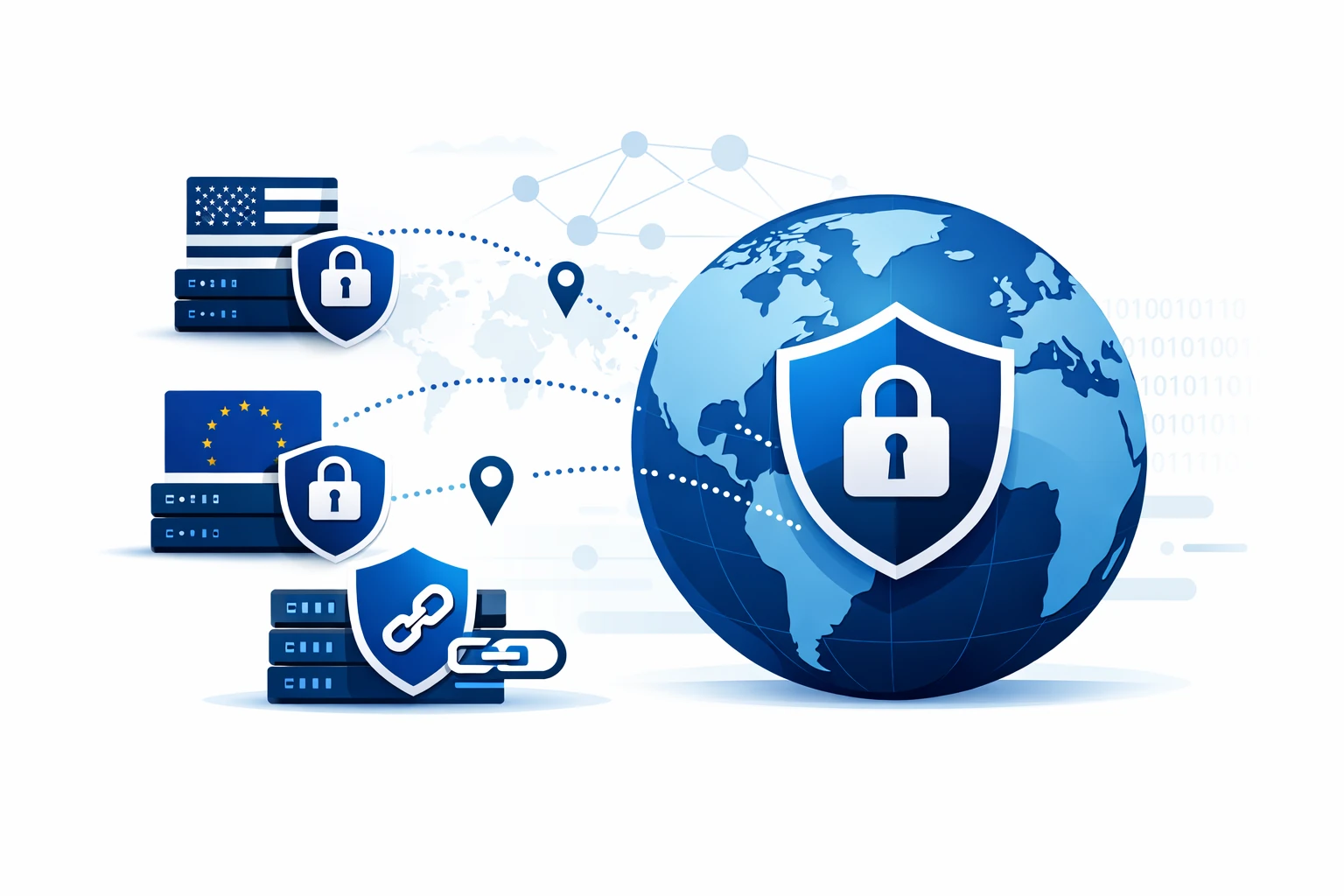
Global brands often operate domains across a constellation of country-code top-level domains (ccTLDs) to reach local audiences, comply with regional branding strategies, and satisfy local regulations. That geographical spread creates a governance and technical challenge: how to maintain a consistent, verifiable chain of trust (DNSSEC) across multiple registries with varying policies, signing schedules, and validation behavior. When even one ccTLD lags in DS publication or signs with incompatible key material, the entire brand risk escalates—customers may see lookup failures, or worse, an unresolved trust pathway that undermines confidence in the brand. This article provides a practical, evidence-based approach to deploying DNSSEC across ccTLDs for global brands, with an emphasis on coordination, automation, and real-world validation. It’s intended for security leads, DNS operators, and platform architects who must balance speed, risk, and compliance across jurisdictions.
DNSSEC is a foundational technology for authenticating DNS data, using a chain of trust anchored to the DNS root. In short, DS records in parent zones point to the DNSKEYs in the child zones, enabling resolvers to validate that the answer they received has not been tampered with. The root zone acts as the ultimate trust anchor; trusted DS records at each level ensure end-to-end validation from resolver to domain data. This mechanism is widely deployed in gTLDs and many ccTLDs, but not all registries publish DS records with the same cadence or to the same specifications. Understanding these dynamics is the first step toward a resilient cross-border deployment. For a high-level refresher on how DNSSEC works and why it matters, see ICANN’s overview of DNSSEC and the broader ecosystem. [ICANN: DNSSEC—What Is It and Why It’s Important].
Understanding the cross-border challenge
Deploying DNSSEC across ccTLDs is not a single-entity problem. It involves registries, registrars, and domain owners who must align operational practices, certificate material, and policy constraints. Some ccTLD registries publish DS records automatically once a zone is signed, while others require explicit actions by the domain holder or the registar. Inconsistent DS publication across borders can lead to partial validation, which erodes user trust and complicates incident response when a domain is involved in cross-border campaigns or e-commerce. The practical effect is simple: if a resolver in one country can validate a domain’s DNS data and another locale cannot, the user experience and security posture differ by geography. The goal is a harmonized, auditable process across all relevant ccTLDs.
Industry observers note that the transition of ccTLDs toward DNSSEC has accelerated, but with uneven execution timelines. ICANN has documented the global shift and notes that the majority of gTLDs were signed by 2020, after which attention increasingly turned to ccTLDs. While not every ccTLD requires DS publication for every domain, many operators now provide some form of DNSSEC validation support, making cross-border coordination both feasible and essential for multinational brands. See ICANN’s announcements and resources that chart deployment progress and ongoing challenges in ccTLDs. [ICANN: DNSSEC now deployed in all gTLDs].
Key concepts you need to coordinate across borders
Before outlining a deployment workflow, it helps to reaffirm the core DNSSEC primitives you’ll manage across jurisdictions:
- DS records: Delegation Signer records published in a parent zone to establish a chain of trust for a child zone. In ccTLDs, multiple registries may require separate DS publication practices and timing.
- DNSKEYs: Public keys used to sign zone data. A Key Signing Key (KSK) signs the Zone Signing Key (ZSK). KSK rollover and DNSKEY rollover events must be coordinated with DS updates to maintain validation continuity.
- Validation: The process by which resolvers verify the chain of trust from root through the DS to the domain’s DNS data. Validation success hinges on correct DS publication, proper signing, and up-to-date trust anchors in resolver configurations.
- Trust anchors: The root (and, in some cases, additional anchor updates) that resolvers trust to start the chain of trust. If a trust anchor is out of date, it can break validation even when DS records exist.
- Policy variability: Registries differ on signature lifetimes, DS publication windows, and acceptance rules for DS records. A unified governance model is essential to prevent drift across jurisdictions.
For readers who want a concrete reference on how these elements fit together, see ICANN’s DNSSEC overview and the status of ecosystem deployment. [ICANN: DNSSEC—What Is It and Why It’s Important].
A pragmatic workflow for cross-border DS publication
The following workflow is designed to minimize downtime, reduce misconfigurations, and provide audit trails for governance teams. It emphasizes automation, centralized visibility, and clear handoffs between registries and domain owners. The workflow is broken into phases that align with typical commercial product cycles (inventory, signing, publishing, validating, and monitoring).
- Phase 1 — Inventory and scoping
- Assemble a complete inventory of domains across all relevant ccTLDs and gTLDs, noting current signing status and DS publication state for each zone.
- Identify registries with explicit DS publication requirements and any registry-specific constraints (signature lifetimes, DS publish windows, or approval steps).
- Define the target validation posture by geography (e.g., which resolver populations must validate and what performance metrics matter).
- Phase 2 — Signing and key management
- Sign all zones where possible, using consistent key material or clearly coordinated key rollover plans across ccTLDs.
- Document KSK and ZSK lifetimes, rollover calendars, and the DS publication schedule for each domain.
- Establish a single, auditable change-control process for DNSKEY and DS updates, with a rollback plan and notification thresholds for stakeholders.
- Phase 3 — DS publication and registry alignment
- Publish DS records in each parent zone where required by the ccTLD registry. This step often requires registry-specific actions or registrar coordination.
- Coordinate publication windows to minimize validation gaps during rollover periods and clearly communicate expected propagation times to downstream partners and internal teams.
- Maintain a cross-border checklist that captures registry policies, DS publication confirmations, and any registry-specific caveats.
- Phase 4 — validation and observability
- Implement continuous validation testing across major geographies and resolver families to detect gaps in the chain of trust.
- Establish dashboards that show DS publication status, DNSKEY rollover progress, and validation success rates by ccTLD and by resolver population.
- Set alerting thresholds for validation failures and schedule regular drills to test failover and rollback procedures.
- Phase 5 — governance and incident response
- Document ownership: who signs what, who approves DS updates, and who communicates changes to business units and customers.
- In incident scenarios (e.g., key compromise or DS misalignment), execute a predefined incident response runbook that prioritizes restoration of validation across the majority of resolver populations first.
- Audit and reporting: retain evidence packs for compliance reviews and executive reporting, including validation histories and any deviations from policy.
Automation is the enabler for this workflow. A mature deployment typically relies on scripts or CI/CD-integrated tooling to publish DS records, roll keys, and refresh trust anchors at scale. The objective is to minimize human latency and minimize the risk of drift between geographies. In this context, DNSSEC explained is not just a tech acronym; it’s a governance discipline that aligns with brand protection and regulatory expectations. For organizations starting from scratch, a staged approach that begins with a core set of critical domains and expands outward is generally more reliable than attempting a full portfolio rollout in a single sprint.
Validation strategy: how to verify cross-border deployment
Validation is more than a “green check” in a dashboard. It’s a multi-layered process that confirms both the existence of DS records and the integrity of the trust chain across multiple geographies and resolver implementations. A robust validation strategy includes:
- End-to-end chain validation: Verify that a root trust anchor resolves to the target DS for each ccTLD, then to the DNSKEY and RRSIG records within the domain’s zone. Tools that simulate resolver behavior across geographies can help surface regional differences in validation.
- Resolver coverage: Track DNSSEC validation status across diverse resolver families (e.g., consumer ISPs, enterprise resolvers, and public resolvers) to ensure broad protection.
- Propagation monitoring: Monitor DS publication and DNSKEY rollover propagation windows to identify gaps and coordinate mitigations with registries and registrars.
- Operational alerts: Set alert thresholds for validation failures that trigger escalation to DNS ops and security leadership.
Real-world validation faces registry-specific delays and occasional policy mismatches. A practical approach is to script verification tasks that repeat at defined intervals (e.g., every 6–24 hours during a rollover) and store results in an auditable log. For a high-level refresher on DNSSEC validation concepts and pitfalls, ICANN’s resources offer a solid baseline. [ICANN: DNSSEC overview].
Market realities: governance, policy, and regional privacy considerations
Cross-border DS publication inevitably intersects with regulatory and policy considerations. Some registries and regulators have unique requirements around key disclosure, algorithm support, and rotation schedules. While DNSSEC primarily provides data integrity and authenticity, practitioners must acknowledge that it does not by itself encrypt DNS responses or hide user queries, and it cannot shield users from phishing that mimics brand names in other parts of the user journey. A balanced risk posture combines DNSSEC with other controls—TLS, DoH/DoT, and robust domain governance—to create a more comprehensive security posture. For governance perspectives on how DNSSEC fits into broader security programs, see ICANN’s discussion of DNS security governance and deployment. [ICANN: DNSSEC overview].
On the practical side, ccTLD operators differ in how they handle DS publication and DNSSEC policy. In some cases, automation can be tightly integrated with registry interfaces; in others, registry-specific manual steps remain necessary. The .it ccTLD, for instance, documents several guidelines around DNSSEC operation and outlines that deployment and DS interactions are not universally mandatory for all registrars, underscoring the need for a careful, jurisdiction-aware plan. See NIC.IT’s technical guidelines for current practice and alignment. [NIC.IT: Synchronous Technical Guidelines v3.2].
Expert insight and practical cautions
Expert insight: Dr. Elena García, Senior DNS Security Architect at SecureDomains, notes that “in cross-border DNSSEC deployments, the most persistent fault lies in registry-induced gaps—DS publication windows, mismatched trust anchors, or differing key rollover cadences. Organizations that centralize policy, and automate DS publishing across registries, tend to achieve far fewer validation holes than those relying on manual updates.”
Limitations and common mistakes are worth highlighting to avoid overconfidence. The most frequent misstep is assuming DS records, once published, propagate instantly and remain valid across all geographies. In practice, propagation delays, registry-specific caching, and divergent TTL expectations can produce transient validation failures even when the underlying data is sound. Another mistake is neglecting key rollover planning. A missing or mis-timed DS update can lead to a broken chain of trust for some resolvers, while others continue to validate, creating an inconsistent user experience. The best defense is a documented, cross-border rollover calendar paired with automated checks and rollback procedures that restore validation quickly across all major resolver populations.
Limitations of DNSSEC as a cross-border solution
DNSSEC is a powerful mechanism for integrity and authenticity of DNS data, but it is not a panacea for all brand-security challenges. It does not replace TLS for encryption, does not guarantee privacy of end-user queries (DNSSEC validates data but does not obscure it), and cannot prevent all forms of brand impersonation that occur outside of DNS (e.g., social engineering or phishing that uses legitimate domains). Therefore, a cross-border DNSSEC program should be part of a holistic security and governance strategy. Coupling DNSSEC with DoH/DoT where appropriate, rigorous certificate management, and ongoing brand-protection monitoring creates a more resilient posture for global domains.
A practical checklist for cross-border DNSSEC readiness
Use this lightweight checklist to guide a first-pass assessment and to coordinate with ccTLD operators and registrars.
- Identify critical domains across all target ccTLDs and confirm which registries require DS publication.
- Establish a shared policy for DS lifetimes, KSK rollover cadence, and DS publication windows across all jurisdictions.
- Sign zones consistently and ensure DNSKEYs align with DS records in every parent zone.
- Implement automated DS publication workflows and validation checks that run across geographies and resolver families.
- Configure monitoring dashboards showing DS publication status, validation success rates, and any registry-specific delays.
- Document ownership and a cross-border change-control process with explicit escalation paths for failures or disputes among registries.
- Prepare a rollback plan and runbooks for incidents that disrupt cross-border validation (e.g., key compromise or DS publication gaps).
- Maintain auditable evidence packs for compliance reviews, including domain inventories, signing status, and validation results by geography.
How dnssec.me and related resources can help
dnssec.me provides foundational guidance on DNSSEC concepts, enabling teams to explain the technology to stakeholders and to map out a path to deployment. For managers seeking broader domain visibility and governance resources, partner tools and references—such as webatla’s domain inventories by country and by TLD—can help teams audit and plan cross-border deployments. See the following resources for practical scoping and domain intelligence: webatla: List of domains by Countries and webatla: List of domains by TLD for portfolio visibility, and webatla: RDAP & WHOIS Database for registration-state checks. These tools complement DNSSEC-focused guidance with governance visibility.
For publishers and practitioners who want a unified reference on DNSSEC concepts, the dnssec.me site provides explanations and practical guides that can be cited in internal documentation and cross-border playbooks. In the broader ecosystem, ICANN’s DNSSEC resources offer authoritative context on policy evolution and deployment milestones that help frame cross-border work for executives and regulators. [ICANN: DNSSEC overview].
Conclusion
Coordinating DS publication across ccTLDs is a non-trivial but essential discipline for global brands that want consistent, verifiable DNS security. The practical steps outlined here—phase-gated signing, cross-border DS publication alignment, automated validation, and governance-driven incident response—help ensure a resilient chain of trust across geographies. While DNSSEC cannot solve every security or privacy challenge, it does provide a robust, auditable foundation for authentic DNS data, which is a critical piece of modern domain security strategy. By treating DNSSEC as both a technical protocol and a governance program, organizations can achieve consistent validation outcomes, reduce regional discrepancies, and deliver a more trustworthy experience to customers around the world.