DNSSEC: The Complete Guide to DNS Security Extensions

DNSSEC (Domain Name System Security Extensions) is the protocol that protects your domain from DNS spoofing, cache poisoning, and man-in-the-middle attacks. Learn how DNSSEC works, why every domain needs DNSSEC, and get step-by-step DNSSEC implementation guides for all major platforms.

What is DNSSEC?

DNSSEC (Domain Name System Security Extensions) is a suite of specifications designed to add security to the DNS protocol. DNSSEC protects internet users from forged DNS data by using public-key cryptography to digitally sign DNS records. When DNSSEC is enabled, DNS resolvers can verify that the DNS response they receive is authentic and has not been tampered with.

The original DNS protocol, designed in the 1980s, had no built-in security mechanism. This made DNS vulnerable to various attacks where malicious actors could redirect users to fake websites. DNSSEC was developed to address these vulnerabilities by adding authentication to DNS responses.

How DNSSEC Works

DNSSEC works by creating a chain of trust from the DNS root zone down to individual domain names. Here's the DNSSEC process:

  1. Zone Signing: The domain owner signs their DNS zone with a private key, creating RRSIG (Resource Record Signature) records
  2. Key Publication: The public key (DNSKEY) is published in DNS so resolvers can verify signatures
  3. Delegation Signer: A DS (Delegation Signer) record is placed in the parent zone, linking the child zone's keys to the parent
  4. Validation: DNSSEC-validating resolvers verify each signature up the chain to the root trust anchor

DNSSEC Record Types

DNSSEC introduces several new DNS record types:

  • DNSKEY: Contains the public signing key for a zone
  • RRSIG: Contains the cryptographic signature for a DNS record set
  • DS: Delegation Signer record that links parent and child zones
  • NSEC/NSEC3: Provides authenticated denial of existence for non-existent domain names

Why DNSSEC Matters for Your Infrastructure

DNS is the backbone of the internet, but it was designed without security in mind. DNSSEC adds the critical layer of protection your domains need.

Prevent DNS Spoofing

DNSSEC uses cryptographic signatures to verify that DNS responses are authentic and haven't been tampered with during transit. Without DNSSEC, attackers can inject false DNS data and redirect users to malicious websites.

DNSSEC Chain of Trust

DNSSEC establishes a hierarchical chain of trust from root servers down to your domain. Each level vouches for the next, ensuring end-to-end DNSSEC verification from the root zone to your specific domain records.

Protect Your Reputation

DNSSEC prevents attackers from redirecting your users to phishing sites that impersonate your brand. Protect your reputation and maintain customer trust with verified DNS responses.

Key Benefits of DNSSEC Implementation

DNSSEC Prevents Cache Poisoning Attacks

DNS cache poisoning (also known as DNS spoofing) is an attack where malicious DNS data is inserted into a resolver's cache. When users query that resolver, they receive the poisoned data and are directed to attacker-controlled servers. DNSSEC prevents cache poisoning by allowing resolvers to verify the authenticity of DNS responses through cryptographic signatures.

DNSSEC Enables Secure Email Delivery

DNSSEC is a foundational technology for email security mechanisms like DANE (DNS-Based Authentication of Named Entities). With DNSSEC-signed TLSA records, email servers can authenticate TLS certificates directly through DNS, preventing man-in-the-middle attacks on email traffic. DNSSEC + DANE provides a more robust alternative to traditional certificate authorities for email encryption.

DNSSEC Supports Modern Security Standards

Many modern security protocols and technologies rely on DNSSEC for secure DNS lookups:

  • DANE (RFC 6698): Uses DNSSEC to bind TLS certificates to DNS names
  • DMARC/DKIM/SPF: Email authentication relies on authentic DNS records
  • CAA Records: DNSSEC protects Certificate Authority Authorization records from tampering
  • SSHFP Records: SSH fingerprints in DNS require DNSSEC for security

DNSSEC Compliance Requirements

DNSSEC is increasingly required by government regulations and industry standards:

  • US Government: All .gov domains require DNSSEC
  • Financial Services: Many regulatory frameworks recommend DNSSEC
  • Healthcare: HIPAA security requirements align with DNSSEC benefits
  • European Union: NIS2 directive emphasizes DNS security including DNSSEC

DNSSEC Knowledge Base

From DNSSEC fundamentals to advanced troubleshooting, we cover everything you need to implement and maintain DNSSEC on your domains.

DNSSEC Foundational Concepts

Understand the core principles of DNSSEC and DNS security extensions.

DNSSEC Implementation Guides

Step-by-step DNSSEC tutorials for popular platforms and registrars.

DNSSEC Troubleshooting

Diagnose and fix common DNSSEC configuration issues.

DNSSEC Verification Tools

Test and validate your DNSSEC configuration with these tools and guides.

DNSSEC Technical Deep Dive

DNSSEC Key Types: KSK and ZSK

DNSSEC uses two types of cryptographic keys to secure DNS zones:

Zone Signing Key (ZSK): The DNSSEC ZSK is used to sign individual DNS records in the zone. The ZSK is rotated more frequently (typically every 1-3 months) because it's used often. ZSK uses shorter key lengths (1024-2048 bits) to keep DNSSEC signatures compact.

Key Signing Key (KSK): The DNSSEC KSK signs only the DNSKEY record set, essentially vouching for the ZSK's authenticity. The KSK is rotated less frequently (annually or less) and uses longer key lengths (2048-4096 bits) for enhanced DNSSEC security. The KSK's hash is published as the DS record in the parent zone.

DNSSEC Algorithms

DNSSEC supports multiple cryptographic algorithms for signing:

  • RSA/SHA-256 (Algorithm 8): Widely supported DNSSEC algorithm, recommended for compatibility
  • ECDSA P-256 (Algorithm 13): Modern DNSSEC algorithm with smaller key sizes and signatures
  • Ed25519 (Algorithm 15): Newest DNSSEC algorithm, highly efficient and secure

Most DNSSEC deployments today use Algorithm 13 (ECDSAP256SHA256) due to its balance of security, efficiency, and broad support among DNSSEC-validating resolvers.

DNSSEC Validation Process

When a DNSSEC-validating resolver receives a DNS response, it performs the following DNSSEC validation steps:

  1. Fetch the DNSSEC RRSIG records for the requested data
  2. Fetch the DNSSEC DNSKEY records for the zone
  3. Verify the DNSSEC RRSIG using the ZSK from the DNSKEY set
  4. Verify the ZSK using the KSK (check the DNSSEC self-signature)
  5. Fetch the DNSSEC DS record from the parent zone
  6. Verify the DS matches the KSK's hash
  7. Recursively validate the DNSSEC chain up to the root trust anchor

If any step in the DNSSEC validation process fails, the response is marked as BOGUS and rejected by the resolver.

Frequently Asked Questions About DNSSEC

Is DNSSEC free to enable?

Yes, DNSSEC is free to enable with most modern DNS providers. Cloudflare, Google Cloud DNS, AWS Route 53, and many domain registrars offer DNSSEC at no additional cost. The DNSSEC protocol itself is an open standard with no licensing fees.

Does DNSSEC slow down DNS resolution?

DNSSEC adds minimal overhead to DNS queries. While DNSSEC responses are larger due to signature data, modern DNSSEC-validating resolvers are highly optimized. The security benefits of DNSSEC far outweigh any negligible performance impact.

What happens if DNSSEC validation fails?

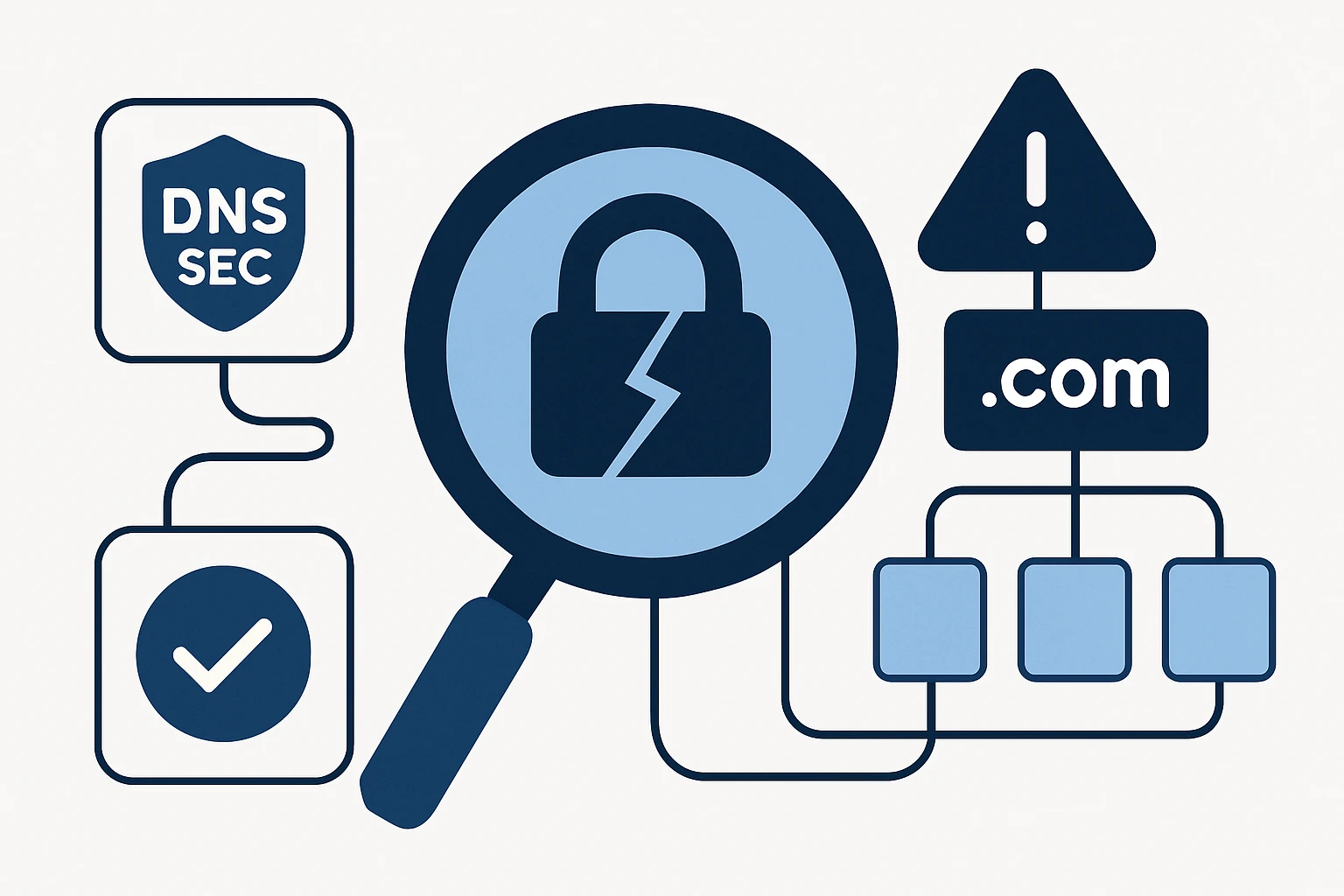
When DNSSEC validation fails, a validating resolver returns SERVFAIL instead of the DNS data. This protects users from potentially spoofed DNS responses. However, it also means misconfigured DNSSEC can break your domain's DNS resolution entirely.

Do all DNS resolvers support DNSSEC?

Major public DNS resolvers support DNSSEC validation, including Google Public DNS (8.8.8.8), Cloudflare DNS (1.1.1.1), Quad9 (9.9.9.9), and OpenDNS. ISP resolvers have varying DNSSEC support. Users can configure their devices to use DNSSEC-validating resolvers.

Can DNSSEC break my website?

Yes, misconfigured DNSSEC can cause DNS resolution failures for your domain. This typically happens when the DS record doesn't match the DNSKEY, or when DNSSEC signatures expire. Proper DNSSEC configuration and using managed DNSSEC services prevents these issues.

Does DNSSEC encrypt DNS traffic?

No, DNSSEC provides authentication and integrity, not encryption. DNSSEC proves that DNS data is authentic and untampered, but the queries and responses remain visible to network observers. For DNS privacy, combine DNSSEC with DNS over HTTPS (DoH) or DNS over TLS (DoT).

How do I check if a domain has DNSSEC?

You can verify DNSSEC status using command-line tools like dig or online DNSSEC analyzers like DNSViz and Verisign DNSSEC Analyzer. Look for DS records at the parent zone and DNSKEY/RRSIG records at the domain level. See our DNSSEC verification guide.

Which TLDs support DNSSEC?

Most TLDs support DNSSEC, including all major gTLDs (.com, .net, .org) and many ccTLDs. The DNS root zone has been signed since 2010, enabling DNSSEC for any TLD that chooses to implement it. Some legacy ccTLDs may not yet support DNSSEC.

Trusted by Security Professionals

Our DNSSEC documentation is used by DevOps teams, system administrators, and cybersecurity specialists worldwide.

50+

DNSSEC Articles

5

Platform Guides

100%

Free Resources

24/7

Available Online

DNSSEC Support by Popular Providers

Most major DNS providers and registrars now offer DNSSEC support. Here's an overview of DNSSEC capabilities across popular platforms:

DNS Providers with Automatic DNSSEC

  • Cloudflare: One-click DNSSEC activation, automatic DNSSEC key management, free on all plans
  • AWS Route 53: Full DNSSEC signing support with KMS integration for key management
  • Google Cloud DNS: Managed DNSSEC with automatic key rotation
  • NS1: Enterprise DNSSEC with advanced automation

Domain Registrars with DNSSEC Support

  • GoDaddy: DNSSEC available for domains on GoDaddy nameservers; DS record upload for external DNS
  • Namecheap: DNSSEC included with PremiumDNS; DS record support for all domains
  • Google Domains: Automatic DNSSEC for Google DNS; DS upload for external nameservers
  • Porkbun: Free DNSSEC signing and DS record support

When selecting a DNS provider or registrar, consider their DNSSEC automation capabilities. Managed DNSSEC solutions that handle key rotation automatically significantly reduce the risk of DNSSEC-related outages.

Ready to Implement DNSSEC?

Start with our beginner-friendly DNSSEC guide or jump straight to implementation. Protect your domains from DNS-based attacks with DNSSEC today.

Get Started with DNSSEC