Future-Proofing DNSSEC: Algorithm Transitions and SHA-1 Deprecation
DNSSEC has established a cryptographic chain of trust for the global DNS, but the ecosystem that sustains it is dynamic. In recent years, operators have focused on getting DNSSEC signed and validated at scale; today, the challenge is ensuring that those deployments survive the next wave of cryptographic updates. This article examines a practical, operator-focused approach to future-proofing DNSSEC against algorithm rollovers, DS publication shifts, and the gradual deprecation of SHA-1-based signatures. The goal is not a theoretical blueprint but a concrete readiness plan you can apply across a multi-domain portfolio.
Two forces are shaping current DNSSEC evolution. First, the cryptographic landscape has evolved to favor stronger algorithms and hashes. SHA-1 usage in DNSSEC has been under scrutiny for years, and recent initiatives push operators toward modern algorithms for both DNSKEY and RRSIG. Second, there is a move toward formalizing deprecations and rollovers via IETF and community-led roadmaps. Taken together, these changes imply a staged, governance-driven path rather than a single big-bang migration. As you plan, recognize that the exact timelines are subject to negotiation among registries, ICANN/IANA, and the wider ecosystem.
For context, the DNSSEC ecosystem already maintains a registry of cryptographic algorithms, with new options periodically added and older ones retired or marked deprecated. This means operators must continually monitor the IANA DNSSEC Algorithm Numbers registry and align their zones with current recommendations. This article offers a practical framework to operationalize those recommendations. IANA DNSSEC Algorithm Numbers registry provides the official catalog of algorithms in use today. (iana.org)
What’s shifting in DNSSEC today?
Three interrelated shifts are worth tracking for any portfolio that aspires to long-term resilience:
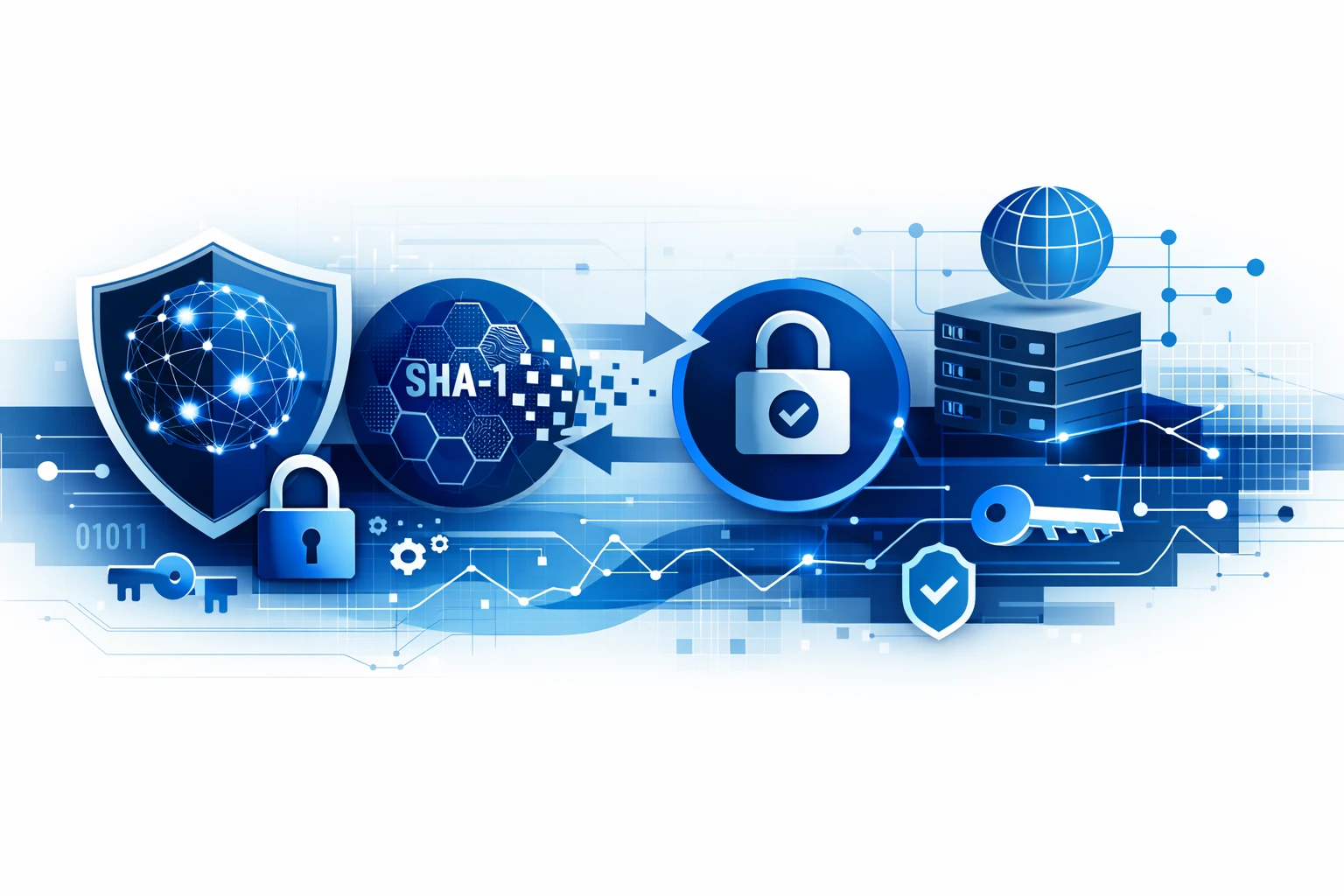
- Deprecation of SHA-1 in DNSSEC. The industry is moving away from SHA-1-based signing in favor of stronger hash algorithms. This transition affects both the algorithms used to sign (DNSKEY/RRSIG) and the DS records that link zones in a trust chain. The IETF and registries are coordinating timelines to minimize disruption while retiring vulnerable options. (rfc-editor.org)
- Algorithm rollovers and new signing options. New algorithms (for example, ECDSA-based signatures) are increasingly supported, while legacy RSA/SHA-1 configurations are discouraged or deprecated in practice. Operators must assess which algorithms best balance security, performance, and toolchain compatibility. ICANN/Root governance discussions highlight planned transitions that may influence KSK/DS management in the coming years. (icann.org)
- DS publication and validation workflow fragility. As DS records migrate across registries and TLDs, misconfigurations—such as publishing DS records without signed zones, or failing to update trust anchors—continue to cause outages. Automated workflows for DS publication, CDS/CDNSKEY usage, and cross-TLD coordination are becoming essential, not optional. (dnsbelgium.be)
In practice, this means you should expect and prepare for a multi-year transition path rather than a single fix. Timely, tested, and automated processes will distinguish resilient portfolios from those that experience validation outages during transitions. A practical way to consume this is to adopt a framework that emphasizes inventory, planning, automation, and validation, all anchored by governance and documentation.
A practical readiness framework for DNSSEC evolution
The framework below is designed for operators managing multiple domains or a portfolio across different registries and TLDs. It is intentionally concrete and actionable, with clear milestones and checklists you can adapt to your organizational context.
Step 1 — Inventory your DNSSEC state and future needs
Begin with a precise inventory of all zones under management and the signing/DS state for each. Key data points include which zones are signed, the current DNSKEY signing algorithm(s), the RRSIG algorithm(s), whether a DS record exists at the parent, and which DS algorithm(s) are currently published. You should also identify zones that still rely on SHA-1 in their signatures or DS records. This inventory informs which domains require early remediation and which can follow a standard upgrade path. Industry observers emphasize that an accurate baseline is the foundation of any transition plan. Current context: IANA maintains the official algorithm registry, which must be consulted as you classify zones by algorithm family. (iana.org)
Step 2 — Choose transition paths that minimize risk
- Prefer non-SHA-1 signing algorithms for DNSKEY and RRSIG. While SHA-1 has historical adoption, modern deployments favor SHA-256/384 or elliptic-curve schemes. De-emphasize or disable RSA-SHA-1 in readiness plans and prepare to publish DS records that reference non-SHA-1 DNSKEYs. Emerging IETF guidance and national registries are steering this direction. (datatracker.ietf.org)
- Plan DS publication strategy across registries. If you operate across many TLDs, you’ll likely interact with both CDS/CDNSKEY and DS publication flows. Automation that can adapt to registry-specific requirements reduces the risk of orphaned zones or validation failures. Registries are increasingly promoting automation to align DS publication with KSK/RRSIG transitions. (icann.org)
- Adopt modern signing algorithms where feasible. Algorithms such as RSA/SHA-256 and ECC-based options are widely supported and recommended for new zone signing policies. Keep an eye on IANA’s registry of algorithm numbers to stay compliant as new algorithms are designated and older ones are deprecated. (iana.org)
Choose a transition path that minimizes operational disruption. For many operators, parallel-running DS records and staged trust-anchor updates provide a safer corridor for change management. The key is to document decisions, set expectations with registries, and validate every step before cutting over in production.
Step 3 — Automate DS publication and DS-related workflows
- Automate DS record management and trust-anchor updates. The goal is to publish DS records in a controlled, auditable manner, ideally with an automated workflow that coordinates with CDS/CDNSKEY signaling where supported. Automation reduces human error and speeds detection of mismatches across portfolio zones. (icann.org)
- Coordinate cross-TLD and cross-country deployments. For portfolios spanning multiple registries, standardized runbooks and governance controls help ensure that DS publication, KSK rollover timing, and validation checks stay in sync. Industry discussions around root-zone management and algorithm rollovers emphasize cross-entity coordination. (icann.org)
- Integrate validation checks into CI/CD-like pipelines for DNS. Treat DNSSEC validation as an operational signal—build tests that verify that each domain resolves with validated DNSSEC data in a staging environment before production deployment.
Automation is not a silver bullet. It must be paired with policy, monitoring, and periodic audits to avoid surprises when regulators or registries change requirements. The DNSSEC ecosystem rewards deliberate governance as much as technical capability. IANA’s algorithm registry remains the canonical reference for the supported algorithms, and it is essential to stay aligned with its updates. (iana.org)
Step 4 — Establish rigorous validation and monitoring
- Implement end-to-end validation checks. Regularly verify that each domain in your portfolio validates against a current trust chain, and confirm that DS records at the parent match the zone’s signing configuration. Use validated checkpoints to catch drift early rather than after a change is live. The risk of misconfiguration increases with portfolio size; automated validation reduces this risk.
- Monitor validation latency and user impact. Some algorithm transitions can temporarily affect validation latency or resolver behavior. Document the potential impact on end users and set appropriate MTTR (mean time to restoration) targets for any incident.
In addition to technical validation, governance-driven checks—such as change control calendars and registry-specific milestones—are vital. A robust readiness program combines technical rigor with governance discipline. Root guidance and deprecation timelines are being proposed and refined by industry bodies; a proactive, evidence-based plan can help minimize disruption. (icann.org)
Limitations and common mistakes to avoid
Even with a strong plan, certain realities can derail DNSSEC evolution if not anticipated. Here are the most frequent limitations and missteps observed in practice, along with concrete mitigations:
- Misalignment between DS publication and zone signing. Publishing DS records while the parent zone is not properly signed or the child zone is not yet ready can result in validation failures. Always ensure a signed zone and valid RRSIGs precede DS publication. (dnsbelgium.be)
- Relying on SHA-1 in DS or signatures for too long. As deprecation efforts accelerate, maintaining SHA-1 in signatures or DS records increases risk. Proactive migration to SHA-256/384 or modern algorithms is recommended. (ietf.org)
- Underestimating cross-registry coordination needs. Large portfolios require harmonized change windows across registries and TLDs. Inadequate coordination can leave domains in a cryptographic limbo where validation fails in some resolvers but not others. (icann.org)
- Insufficient testing before go-live. Without staged testing across staging domains or subzones, operators risk undetected edge cases. Integrate validation into pre-production checks to reduce outages.
- Lack of ongoing governance and documentation. DNSSEC is not a one-off operation; it requires ongoing key management, monitoring, and policy updates as algorithms evolve.
Even with the best plans, external dependencies exist. Registries may update requirements on timelines or supported algorithms, and some TLDs may have unique constraints. Industry forums and regulatory guidance emphasize continuous learning and iterative improvement as essential components of DNSSEC readiness. For example, discussions around root-zone algorithm transitions highlight planned, phased changes that organizations should track over time. (icann.org)
How dnssec.me and partners can help you navigate this evolution
DNSSEC is easier to manage when a portfolio has clear governance, robust tooling, and reliable monitoring. dnssec.me provides a structured perspective on DNS security that complements practical vendor capabilities. For organizations with broad domain portfolios, a combination of editorial guidance and tooling can help align strategy with execution. Consider the following avenues:
- Editorial guidance and diagnostics. Use practical checklists and diagnostic frameworks to identify where a portfolio is most at risk during transitions. dnssec.me’s ongoing coverage helps operators stay aware of emerging best practices and pitfalls.
- Automated workflows and DS publication planning. Where possible, implement automated DS publication workflows that are compliant with registry requirements, reducing the risk of stale or missing DS records during transitions. Collaboration with a DNS management partner can help synchronize changes across TLDs.
- Portfolio-level security monitoring. Establish health dashboards that surface DNSSEC validation status, DS publication status, and algorithm-level risk indicators. Observability is a precursor to rapid remediation when transitions occur.
In this context, external providers and services—such as domain portfolio management platforms—can support the operational aspects of DNSSEC readiness. For teams evaluating solutions, it is useful to consider automation capabilities, cross-TLD coordination features, and a clear governance model that aligns with regulatory expectations.
Client integration: a practical path for multi-domain operators
A portfolio approach—across country-code TLDs and generic TLDs—benefits from a centralized capability to coordinate DS publication, KSK management, and validation monitoring. One way to operationalize this is by leveraging a partner with domain lifecycle tooling and a transparent pricing model to support DS automation, DS record audits, and DNSSEC health checks. For example, Webatla’s suite and domain portfolio tooling provides a structured way to view domains by TLD and country, which can support cross-registry coordination and portfolio governance. Consider these touchpoints as you plan a future-proof DNSSEC program:
- Portfolio view by country and TLD for cross-registry coordination, including DS publication status and zone signing visibility.
- Pricing and managed services to scale automation and governance across a multi-domain portfolio.
- RDAP & WHOIS database to support governance and lifecycle planning for domain assets.
These client resources illustrate how a disciplined, portfolio-wide approach can align technical readiness with operational reality. They also demonstrate how partner tools can reduce the cognitive load of managing multiple registries while maintaining a high standard of DNSSEC hygiene.
Key takeaways and a quick-start checklist
- Start with a precise inventory. Map every zone’s signing algorithm, RRSIG algorithm, and DS status, including any SHA-1 usage. This baseline is essential for a staged transition. (iana.org)
- Develop a staged transition path. Prioritize removing SHA-1 from DS and signatures, while planning for parallel DS publication across registries. (ietf.org)
- Automate and coordinate. Build automation for DS publication and trust-anchor updates, with governance controls to align with registry timelines. (icann.org)
- Validate relentlessly. Integrate end-to-end validation into production readiness, and monitor for latency, failures, and cross-resolver consistency. (dnsbelgium.be)
- Document and govern. Keep a living policy book that captures algorithm transitions, trust-anchor changes, and registry-specific milestones.
Expert perspective and a note on limitations
Experts in DNSSEC operations stress that the most important attribute of a future-proof program is governance: the ability to adapt to evolving cryptographic guidance, while maintaining a stable trust chain for end users. The trend toward deprecating SHA-1 and migrating to stronger algorithms is already visible in national registries and inter-community discussions. This underscores the need for formalized transition plans and cross-registry coordination to minimize outages. Limitation: timelines for algorithm retirement and DS publication are not uniformly fixed across registries, so operators should expect some degree of variability and maintain open channels with registries. (icann.org)
Conclusion
DNSSEC has proven its value as a mechanism for DNS integrity, but its continued effectiveness depends on proactive adaptation to evolving cryptography and registry practices. By inventorying your portfolio, choosing risk-aware transition paths, automating DS-related workflows, and maintaining rigorous validation, you can reduce the likelihood of outages during transitions and keep your domains secure over the long term. The future of DNSSEC is not a single migration; it’s a cadence of updates, tested changes, and disciplined governance. With the steps outlined here, operators can turn cryptographic evolution into a managed, repeatable process rather than a one-off scramble.