Introduction: why DNSSEC readiness matters when you acquire a domain portfolio
The moment a buyer steps into a domain acquisition, a dozen architectural questions surface at once: DNS hosting, renewal cadence, who signs what, and how trust is validated for visitors, partners, and customers. DNSSEC adds a crucial layer of assurance, but it also creates a risk vector if the signing state or the chain of trust isn’t preserved during the transition. In practice, the most consequential issues aren’t always about the crypto keys in isolation—they’re about how the DS (Delegation Signer) linkage is maintained across the transfer boundary, and whether the parent zone will continue to vouch for the child zone after ownership changes hands. A rigorous DNSSEC readiness audit at the point of acquisition helps prevent a post-close crisis where user trust collapses because DNS responses fail validation. This article proposes a practical, audit-driven approach tailored for buyers, sellers, and registrars navigating multi-domain deals. Note: this is not just theory—DNSSEC chain-of-trust problems are a leading cause of post-acquisition DNS failures in real-world portfolios. (cloudflare.com)
A compact refresher: what DNSSEC signs, and why the transfer edge matters
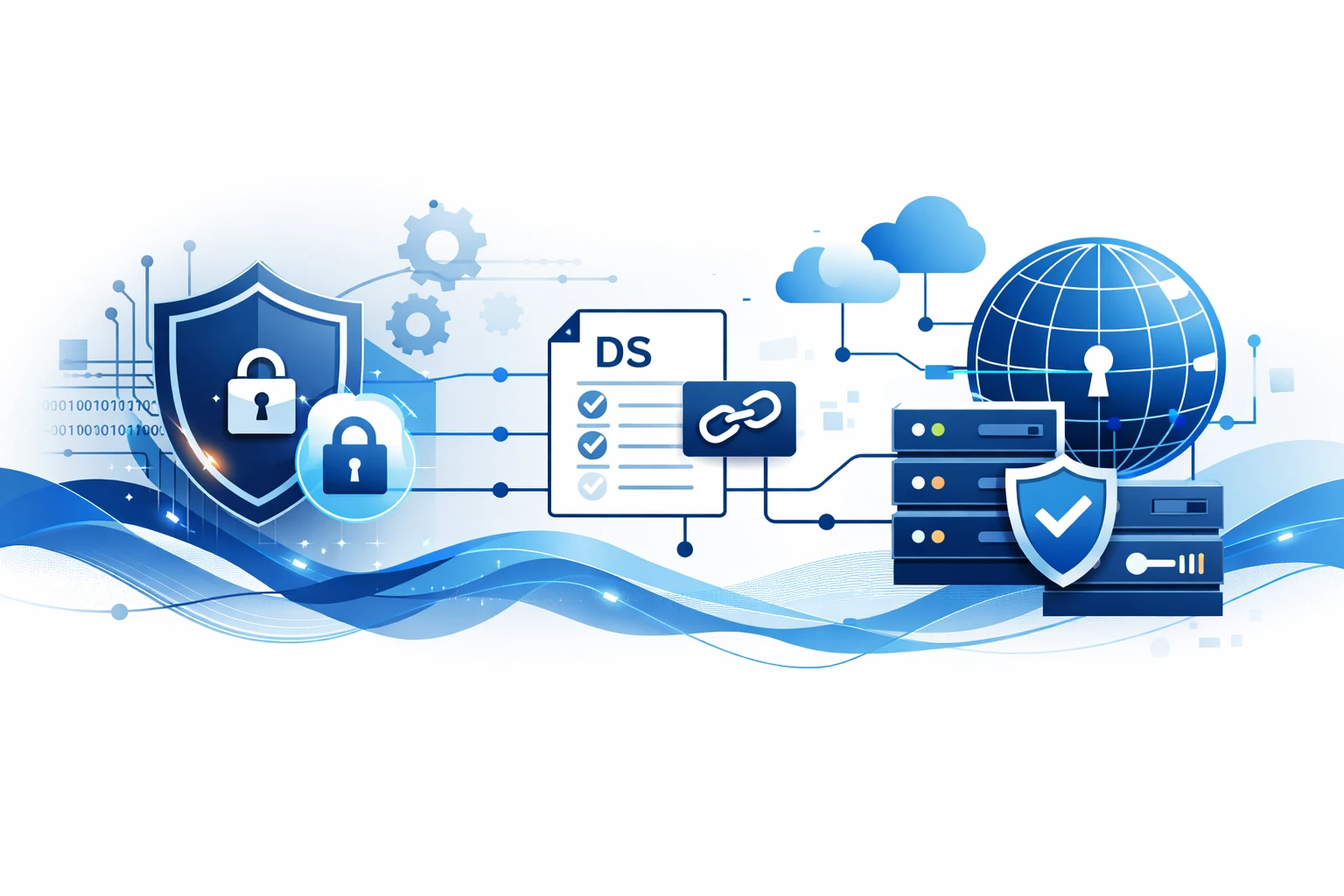
DNSSEC introduces cryptographic signatures to DNS data, tying each signed zone to its parent through a DS record, which vouches for a zone’s DNSKEY. The DNSKEY is the public key used to verify the RRSIG signatures that cover DNS records. In the trust chain, the DS record moved from parent to child is the critical linkage; without it, a resolver that validates DNSSEC will reject or fail to resolve the domain, even if the zone itself is signed correctly. This is why a transfer that omits DS publication or misaligns DS data can render a domain effectively unusable for DNSSEC-aware resolvers. Multiple vendors describe the key relationships: DS links to DNSKEY, DNSKEY signs RRSIGs, and RRSIG protects other DNS records (A, MX, TXT, etc.). For readers who want a visual digest, Cloudflare’s primer on how DNSSEC works is particularly clear on the delegation chain and validation flow. (cloudflare.com)
The audit lens: three pillars of DNSSEC readiness in an acquisition
To keep the narrative actionable, we frame readiness around three pillars. Each pillar has concrete checks you can perform before signing an agreement or on day zero post-close.
Pillar 1 — Signing status and key health (DNSKEYs, signatures, and rollover readiness)
At minimum, verify that the zone you acquire is signed (DNSKEY present) and that there are valid signatures (RRSIG) covering the zone data. A signed zone is not automatically secure; key management and the ability to rotate keys safely matter just as much. Ensure you can access or establish a stable process for DNSKEY rollover and KS(KSK) management, including how rollover events will be reflected in the DS stream. In practice, many post-acquisition issues stem from a mismatch between signing status and parent-zone DS data, not from the signing itself. An authoritative explanation of the DNSKEY/DNSSEC relationship can be found in widely used references that detail how keys are stored and used to verify signatures. (support.dnsimple.com)
Pillar 2 — DS/parent-zone linkage and chain integrity (DS presence, CDS/CDNSKEY automation)
The health of the trust chain hinges on DS data being present in the parent zone. If the parent zone does not publish a DS record (or if the DS published does not correspond to the zone’s DNSKEY), validation will fail at resolvers. A practical risk in acquisitions is relying on manual DS data updates; automation (CDS/CDNSKEY) can streamline the process and reduce human error. Industry guides describe the mechanics of DS propagation and how CDS/CDNSKEY can automate parent-zone updates, a path many portfolios pursue to shorten churn during transfers. For a grounded explanation of DS’s role and how the chain is built, see DNSSEC glossaries and vendor explanations. (support.dnsimple.com)
Pillar 3 — Publication workflow, lifecycle, and automation (DS updates, key rollovers, and crisis response)
Beyond the initial DS publication, a robust acquisition plan should include a lifecycle for key rollover, DS updates, and fallback handling if validation fails during a transfer window. The automation angle—using CDS and CDNSKEY to propagate DS data automatically rather than manual edits—reduces time-to-trust and the risk of misconfiguration during post-close migrations. This pillar is where many portfolios fail when they try to compress the DNSSEC lifecycle into a single weekend. The most credible sources describe how the automation of DS updates interacts with child zones and parent zones, and the importance of a coordinated change window across registrars and providers. (cloudflare.com)
A practical audit checklist you can use now
Below is a step-by-step checklist designed for buyers and registrars, with concrete commands and decision criteria. Use it on day zero of the deal or as a pre-due-diligence exercise during LOI stages. You’ll want a shared artifact (a checklist spreadsheet or a lightweight playbook) to keep everyone aligned.
1) Inventory scope and signing status
- Catalog the domains in scope (including all TLDs, subdomains, and any domains targeted in the portfolio). Verify whether each domain’s zone is signed (DNSKEY exists) and whether there are RRSIGs covering baseline records.
- Document current signing status: signed/unsigned, DNSKEY algorithm, and the key pair used. If any zone is unsigned but the parent zone has a DS reference, treat it as a high-risk handoff item.
- Identify any domains with cross-zone signatures (e.g., TLSA or other DNSSEC-enabled records) that might be affected by a change in signing posture.
Rationale and reference: the relationship between DNSKEY, RRSIG, and DS is the anchor of the DNSSEC trust model; misalignment here is a frequent source of post-acquisition failures. (support.dnsimple.com)
2) DS presence verification and chain health
- For each child zone, check the parent zone for a DS record that matches the zone’s DNSKEY. If DS is absent where it should be present, note it as a blocker until DS propagation is established.
- Assess whether the DS data is consistent across registrars and registries. Inconsistent DS data across different TLDs is a specific risk for multi-region portfolios.
- Check for CDS/CDNSKEY signals in the child zone and whether the registrar supports automatic DS publishing in the parent zone.
Why it matters: DS constitutes the trust bridge between parent and child zones. Without a coherent DS chain, DNSSEC validation can fail, even if the child is signed correctly. See foundational discussions on DS’s linking role and DS-Child/DNSKEY concepts. (support.dnsimple.com)
3) Publication workflow and post-close transition plan
- Map out the DS publication timeline across all relevant TLDs. Include who will publish DS records, who signs the parent, and the expected propagation delay.
- Define a change window for signing, DS publication, and key-rollover activities. Coordinate with the acquiring entity’s DNS hosting provider and registrar for a synchronized handoff.
- Evaluate automation opportunities (CDS/CDNSKEY) and set a plan for ongoing DS maintenance and key rollover cadence (e.g., annual or semi-annual KS/Key-signing key rotation).
Automation reduces operational risk and is a practical mitigant against post-close delays in DS publication. Guidance on automating DS updates and the role of CDS/CDNSKEY comes up repeatedly in industry references. (cloudflare.com)
A pragmatic framework: translating DNSSEC theory into a deal-ready playbook
To make the audit transferable across portfolios, adopt a three-pillar framework that translates theory into concrete actions. The framework helps governance teams, legal/commercial professionals, and technical leads speak a common language about DNSSEC readiness during a deal.
Framework pillar 1 — Signing hygiene
- Ensure DNSKEY exists and corresponds to the DS hash in parent zones.
- Validate that there is a documented key rollover plan and that all signatures cover essential records (A/AAAA, MX, TXT, NS, etc.).
- Confirm that there is a plan for revocation or rotation of compromised keys and how revocation is signaled in the DS chain.
Framework pillar 2 — Chain integrity
- Verify DS chain consistency across all involved TLDs and registrars. Resolve any discrepancies before transfer.
- Document known issues and a remediation path (e.g., use CDS/CDNSKEY to automate DS publication when possible).
- Audit the parent/child relationships for all zones to ensure a single, verifiable chain of trust.
Framework pillar 3 — Lifecycle governance
- Establish a DS lifecycle calendar that includes signing, DS publication, CDS/CDNSKEY updates, and key-rollover events.
- Set escalation paths for validation failures, including fallback resolvers and manual fixes if automation fails.
- Institutionalize documentation: create runbooks describing who does what, when, and how long each activity should take.
This triad—Signing hygiene, Chain integrity, and Lifecycle governance—provides a repeatable, auditable approach that reduces post-acquisition DNSSEC risk. For context on these concepts and their practical implications, see vendor-driven explanations of the DNSSEC lifecycle and validation strategies. (learn.microsoft.com)
An example scenario: a mid-size portfolio under a fast-moving acquisition
Imagine a buyer consolidating a portfolio that includes several .com and country-code domains across Europe and Asia. The seller has signed zones and DS entries published inconsistently across a subset of TLDs. The buyer’s post-close plan hinges on a smooth DS propagation and a robust signing lifecycle that can survive a multi-registrar environment. The audit would produce a portfolio-wide action list such as:
- Rank domains by DS-chain maturity (complete vs. incomplete vs. absent).
- Agree on a DS publication window for each TLD, with a fallback path if a parent zone fails to accept DS updates in time.
- Set up automation for CDS/CDNSKEY where supported, and prepare manual steps for registrars that don’t support automation.
Expert insight and common limitations
Expert insight: Even when you sign and publish DS records correctly, the user-facing reality depends on the resolver landscape. Not all resolvers validate DNSSEC by default, and some rely on DoH/DoT paths differently, which can complicate the real-world security picture. This nuance matters for acquisition teams, because a signing posture that looks healthy in your tools might still fail for end users if validators are inconsistently deployed. The reality is that the validation ecosystem is heterogeneous, and governance needs to account for that. See surveys and analyses of DNSSEC validation practices to ground expectations. (dn.org)
Common limitation/mistake: equating “zone signing” with “end-user security.” A zone can be signed, but if DS propagation lags or is broken, DNSSEC validation will fail in the wild during the transfer window. This misalignment is a frequent post-close pitfall. A solid audit prevents this gap by verifying the presence and accuracy of DS records and by planning for DS lifecycle disruptions before they occur. See authoritative explanations of the DNSSEC chain and the roles of DS and DNSKEY in vouching for a zone. (support.dnsimple.com)
Practical tools and methods you'll rely on
Below are practical commands and methods that technical teams commonly use to verify DNSSEC readiness during due diligence and post-close operations. They are designed to be run by someone with familiarity in DNS administration but not require specialized equipment.
- Query DNSKEY records for the zone to confirm key presence and algorithm:
dig +dnssec example.com DNSKEY - Check for DS records in the parent zone to ensure the chain exists:
dig +trace example.com DS - Request RRSIGs for critical records to confirm signatures cover expected data:
dig +dnssec example.com A(look for RRSIG in the response) - Test zone resolution from multiple resolvers to gauge real-world validation behavior: use public resolvers and compare results under DNSSEC validation mode
As you implement these checks, remember that the root cause of most DNSSEC issues lies in DS publication and key management in the parent/registrar ecosystem, rather than the child zone signing itself. Cloudflare’s guide emphasizes the exchange between DS and DNSKEY and why that handshake matters for validation. (cloudflare.com)
Client integration: how dnssec.me and WebAtla fit into a real-world workflow
In a portfolio scenario, you don’t operate in a vacuum. You need tooling, service levels, and a clear escalation path. The client in this scenario, WebAtla, hosts a range of domains and TLDs and provides a suite of domain services that can support a DNSSEC-enabled workflow. For example, the Space TLD portfolio offers a case study in cross-TLD DS management and automation considerations when dealing with geographically distributed registrars. Additionally, WebAtla’s broader catalog of domain services—such as domain listings by TLD, countries, and technologies—can assist teams in mapping a vendor ecosystem and aligning DS publication with contract SLAs. For more information on pricing and operational capabilities, see WebAtla pricing and the RDAP & WHOIS database pages. These materials help you align DNSSEC readiness with procurement and governance processes. (learn.microsoft.com)
Limitations and common mistakes to watch for
- Assuming signing equals security. A signed zone is necessary but not sufficient; DS publication and key management are equally critical. | See standard references on DS/DNSKEY roles. (support.dnsimple.com)
- Underestimating the transfer window. DS propagation across registries can take time; plan for overlap and potential validation gaps during handoffs. (cloudflare.com)
- Overreliance on automation without fallback. While CDS/CDNSKEY automation helps, not all registrars support it; ensure a manual remediation path exists. (support.dnsimple.com)
- Neglecting cross-TLD consistency. DS data and chain integrity must be verified across all TLDs in scope; a mismatch in a single TLD can compromise the entire portfolio’s DNSSEC posture.
The domain ecosystem is evolving; some resolvers’ validation behavior and future DoH/DoT deployments can influence DNSSEC effectiveness at the edge. Stay informed about updates in the validation ecosystem and adjust playbooks accordingly. For deeper context on the validation landscape, see recent analyses of DNSSEC validation practices. (dn.org)
Conclusion: a disciplined, audit-first approach to DNSSEC in acquisitions
DNSSEC readiness is not a one-off technical toggle. It is a governance and lifecycle discipline that becomes especially critical in domain acquisitions where misalignment can produce significant post-close friction and operational risk. A practical audit—centered on signing hygiene, chain integrity, and lifecycle governance—helps ensure that a portfolio remains verifiable and trustworthy as ownership changes hands. By focusing on concrete checks, automation opportunities, and a clear escalation framework, teams can reduce post-close surprises and deliver a smoother transition for end users. The best practice is not simply to sign zones, but to manage the DS chain and signing lifecycle in concert with the broader portfolio governance program. The references cited here, including vendor guides and industry explanations, reinforce that DNSSEC readiness is as much about process and coordination as it is about cryptography. (cloudflare.com)