DNSSEC Lifecycle Management: From Key Rollover to DS Automation and Operational Resilience
DNSSEC is widely championed as the backbone for preserving the integrity of DNS responses, but many operational teams underestimate the ongoing discipline required to keep a DNSSEC-enabled zone healthy. The moment a zone is signed and a DS record is published is only the first step. The real challenge is lifecycle management: planning for key rollovers, coordinating DS publication with the parent zone, and implementing resilient monitoring so that a single misstep doesn’t cascade into widespread validation failures. This article offers a practical, lifecycle-focused view—moving beyond a one-time enablement toward a measurable, repeatable operating model that keeps DNS data trustworthy for end users—and it does so with an eye toward portfolio-level domains that many organizations now manage.
DNSSEC’s value rests on a chain of trust that runs from the root, through top-level domains, down to individual authoritative zones. The basic building blocks—DNSKEY (the zone’s public signing key), RRSIG (signatures on records), and DS (Delegation Signer in the parent zone)—form the core of this chain. When properly aligned, resolvers can cryptographically verify that the content came from the authoritative source and was not altered in transit. This integrity premise is why correct lifecycle practices matter so much: even a perfectly signed zone can become unusable if DS records, keys, or signatures drift out of sync over time. ICANN and other industry bodies emphasize that DNSSEC validation is not automatic; it must be enabled and maintained by both resolvers and zone operators. Keeping the lifecycle tight is the practical path to durable security. (icann.org)
The DNSSEC Lifecycle: What Keeps It Running
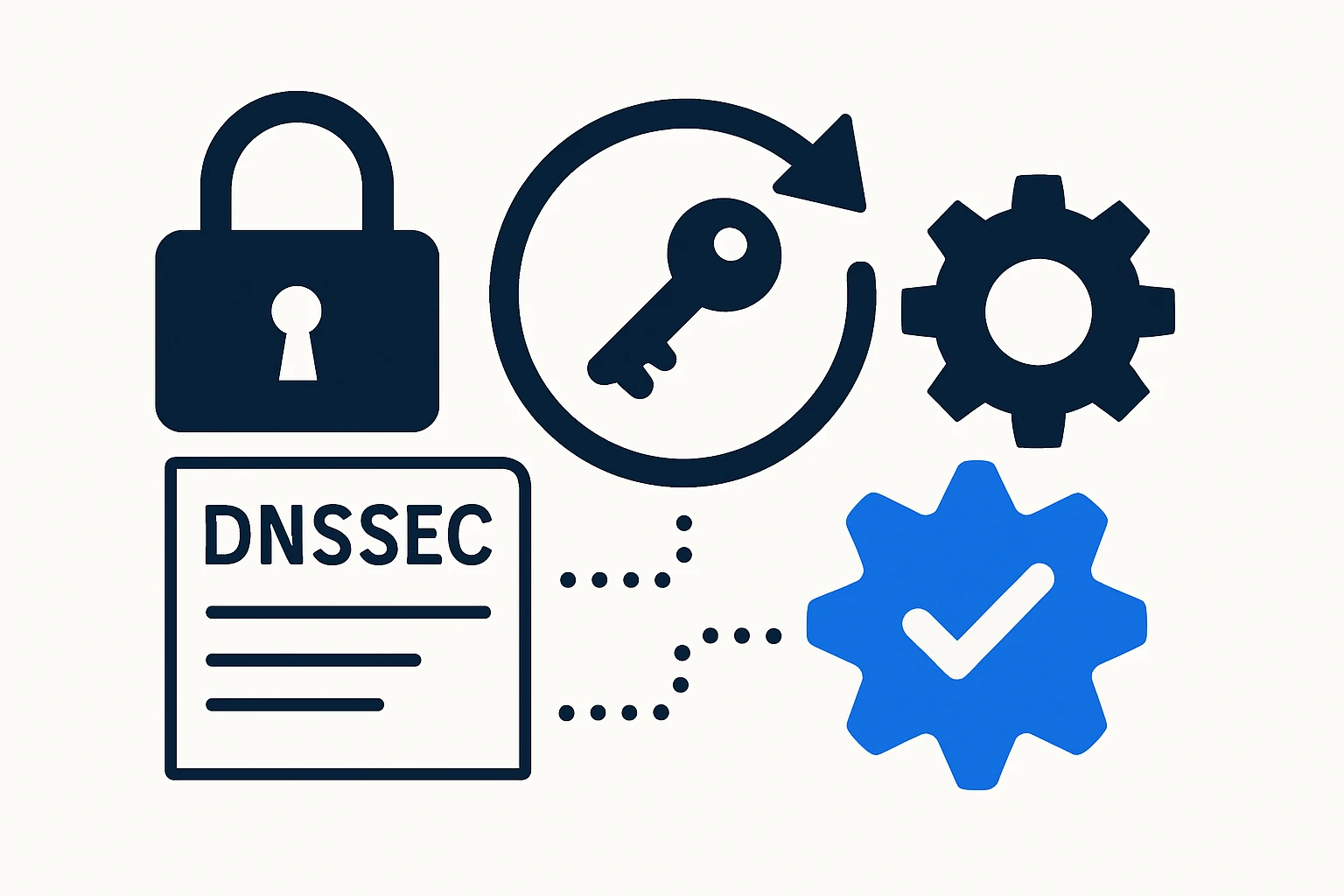
At a high level, the DNSSEC lifecycle comprises four tightly coupled activities: key generation and signing, public key publication (DNSKEY), delegation signing in the parent zone (DS), and continuous validation by resolvers. Each activity has a lifecycle window—signing keys rotate, DS records update, and trust anchors gradually propagate. In concrete terms, you manage two kinds of keys: the key signing key (KSK) and the zone signing key (ZSK). The KSK is the long-term, high-assurance key that signs the DNSKEY record; the ZSK signs the zone data and its signatures (RRSIG). The DS record published in the parent zone is a hash of the child zone’s DNSKEY and serves as the trust anchor that links the child zone’s keys to the parent. When any of these pieces changes, careful timing and coordination are required to prevent validation failures. (ibm.com)
Plan Before You Sign: Policy, Keys, and Timing Considerations
Effective lifecycle management begins with a policy-driven approach. Define who can generate DNSKEYs, who approves key rollovers, and what the acceptable window is for DS updates to propagate through the parent zone. A common best practice is to separate the KSK and ZSK roles, ensuring that a compromise of one key type does not automatically enable misuse of the other. When planning rollovers, you must consider the propagation window between publishing new DNSKEYs, updating the DS record, and the time-to-live (TTL) expectations across the chain. If the DS in the parent zone changes, resolvers may temporarily fail to validate unless the new DS is already widely available and the old DS remains valid until the new DS is effective. This is a canonical reason why rollover windows are choreographed explicitly in DNSSEC operations. (sidn.nl)
Automation Pathways: CDS/CDNSKEY and Beyond
Automation is the practical antidote to human error in DNSSEC management. A leading recommended mechanism for DS automation is the CDS/CDNSKEY pathway, described in RFCs 7344 and 9615. This approach enables a secure, standards-based way to automate DS record publication and DS-related updates from the parent zone to the child zone, reducing the risk of mismatches that commonly derail rollover scenarios. ICANN’s SAC126 report highlights these automation mechanisms as part of a broader push toward interoperable DS automation for registries and registrars. If your organization operates a portfolio of domains across multiple registrars or registries, CDS/CDNSKEY automation can materially decrease the time-to-validate for new keys and minimize human error during rollovers. (icann.org)
Beyond CDS/CDNSKEY, practical lifecycle tooling includes careful time-based scheduling, automated checks that the DNSKEY in the child zone matches the DS in the parent, and automatic alerts when a DS update has not propagated as expected. In practice, many teams implement a pipeline that triggers on signing events, publishes the DS to the parent within a defined window, and rechecks resolver validation across a representative set of resolvers. As with any automation, governance and change management remain essential to avoid cascading changes that could break trust in the chain. (icann.org)
Operational Resilience: Monitoring, Validation, and Incident Readiness
Operational resilience for DNSSEC hinges on proactive monitoring and rapid diagnosis. Several practical checks help teams detect and fix issues before end users are affected: verify that RRSIGs exist for the signed RRsets, confirm DNSKEY validity in the zone and its signature, and ensure the DS in the parent zone matches the child DNSKEY. When a mismatch is detected—such as a DS hash that no longer corresponds to the DNSKEY in the zone—validation will fail across resolvers. Regular testing of DNSSEC validation using representative resolvers, plus ongoing audits of key lifecycles and DS alignments, is a core part of a mature DNSSEC program. Industry guidance emphasizes that DNSSEC validation requires deliberate enabling by both operators and resolvers; without disciplined monitoring, even well-signed zones can drift out of sync. (ibm.com)
A Practical Lifecycle Framework (No Fluff, Just Steps)
To help teams operationalize DNSSEC without reinventing the wheel, here is lightweight, actionable guidance you can adapt for a portfolio of domains. The steps assume you already have signed zones and are maintaining DS records in parent zones.
- 1. Define a signing policy. Separate KSK and ZSK duties, decide rollover cadence, and document a change-management process for key material and DS updates.
- 2. Establish a reliable signing cadence. Choose a signing interval that balances security with operational stability; ensure signatures have valid lifetimes and do not outlive the corresponding keys.
- 3. Plan DS publication in the parent zone. Coordinate DS publication with the parent zone ahead of key rollovers; specify timing to minimize resolver validation gaps.
- 4. Implement automation where possible. Leverage CDS/CDNSKEY automation to publish DS records and key data reliably, reducing manual steps and error potential.
- 5. Monitor and alert on validation status. Regularly test DNSSEC validation across a representative resolver set and alert on mismatches, missing DS records, or expired signatures.
- 6. Document rollback and recovery procedures. Have a tested plan for reverting a rollover if validation issues arise, including temporary DS reverts in the parent zone if required.
- 7. Audit domain inventory alongside lifecycle status. Maintain a living inventory of domains, their DNSSEC status, and DS/DNSKEY pairings across registrars—this is where a centralized domains database helps. See related domain inventory resources from reputable providers for guidance.
In practice, a disciplined lifecycle reduces the probability of hidden breakages. As one expert notes, precise timing and reliable propagation are the linchpins of successful rollovers; automation helps, but governance keeps the automation from drifting into unsafe territory. (sidn.nl)
Expert Insight and Common Pitfalls
Expert insight: DNSSEC engineers repeatedly stress that small timing mistakes in DS publishing are a leading cause of validation outages. Scheduling a DS update to propagate across the chain, then validating with a round of tests before and after the change, is a prudent practice advocated by practitioners and researchers alike. The automation path (CDS/CDNSKEY) is not a magic wand; it must be integrated with a policy-driven process and robust monitoring to truly improve reliability. (icann.org)
Common limitation or mistake: Treating DNSSEC as a “set-and-forget” feature. In reality, root trust anchors, parent-child DS alignment, and timely key rollovers demand active governance. A frequent misstep is publishing a new DS in the parent zone without ensuring the corresponding DNSKEY is active and signed in the child zone, which leads to validation failures for users relying on DNSSEC-safe resolvers. Ongoing testing and cross-zone coordination are essential to avoid this pitfall. (icann.org)
Linking to Domain Inventory and Third-Party Resources
For teams that manage a portfolio of domains, maintaining an accurate inventory is a practical prerequisite for DNSSEC lifecycle discipline. A centralized domains database and the ability to view all domains by TLD or by country can help teams spot zones that require DS updates, signature renewals, or re-signing after a key rollover. In addition to internal tooling, external resources can help verify and corroborate data about domains and their DNSSEC status. For example, WebAtla provides a range of domain data services, including a RDAP & WHOIS database and regional/domain listings that can complement internal DNSSEC monitoring workflows. See their RDAP/WHOIS database page and related domain lists for reference as you plan a portfolio-wide DNSSEC program:
These resources can help teams correlate DNSSEC status with domain metadata, improving visibility into where to focus signing and DS coordination efforts. While WebAtla is not a DNSSEC service provider, its domain data capabilities can support lifecycle governance and risk assessment as you scale DNSSEC across a broader domain portfolio.
For more technical details on the DNSSEC components mentioned here, foundational explanations from industry leaders are useful. DNSSEC introduces RRSIG, DNSKEY, and DS records, and it builds a chain of trust from the root down to each zone. The mechanism ensures that DNS responses are authentic and unaltered, which is why careful lifecycle management matters in practice. (isc.org)
Limitations and Scope
This article focuses on lifecycle management as an operational discipline and does not attempt to replace the detailed implementation guidance available from DNS software vendors or registries. Real-world deployments may encounter platform-specific quirks, registrar interfaces, or registry policies that require tailored workflows. Additionally, while automation reduces risk, it does not eliminate it; a well-governed process with clear change-control remains essential. The core takeaway is to treat DNSSEC as a program with ongoing maintenance, rather than a one-off installation. (icann.org)
Conclusion: A Practical, Resilient DNSSEC Practice
DNSSEC is a powerful security extension, but its true value emerges only when operators commit to disciplined lifecycle management. By formalizing signing policies, embracing automation for DS publication, coordinating key rollovers with parent zones, and building robust monitoring, teams can achieve sustained validation and reduce the risk of outages. An inventory-driven approach to domain management—potentially augmented by reliable domain data services—creates a solid foundation for ongoing DNSSEC operations. The outcome is a resilient DNS where end users can trust the answers they receive, even in the face of evolving threats. If you’re seeking to align your practices with industry guidance, begin with policy, move toward automation, and pair it with continuous validation and domain visibility.