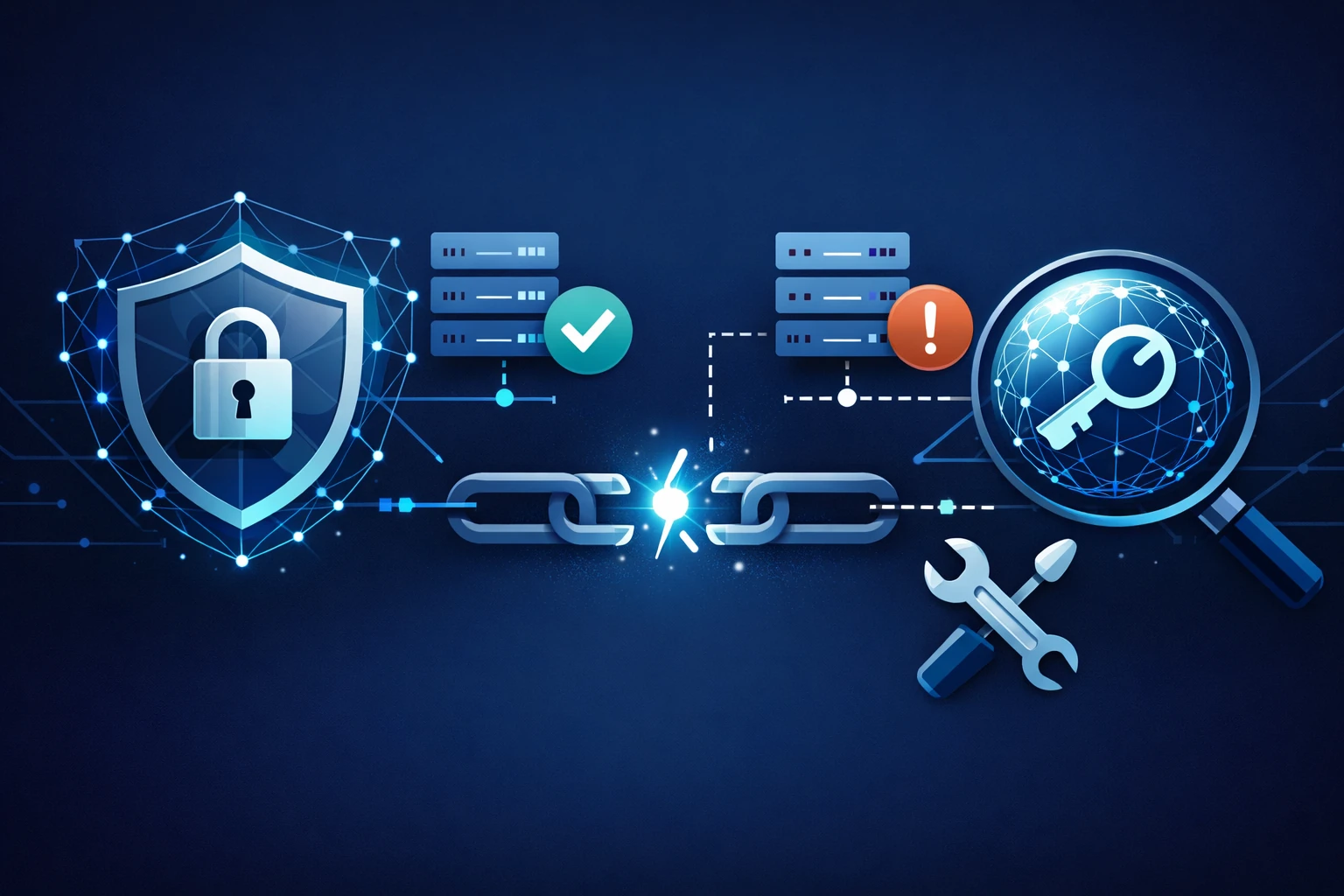
The problem with mixed resolver environments
In today’s internet, users connect through a mosaic of networks and resolvers — home routers, mobile carriers, corporate networks, and public recursive resolvers. Even when a domain is correctly signed with DNSSEC, the user experience can vary dramatically depending on which resolver handles the query. Some resolvers validate signatures end-to-end; others skip validation or fail to fetch the necessary DS/DNSKEY data, leading to inconsistent results across users. For domain operators, this isn’t a theoretical concern: misconfigurations or partial adoption can produce outages for validating users while others see normal resolution. The consequence is not only a broken trust signal but also potential business risk in a portfolio that spans multiple TLDs and regions. RFC 4033, RFC 4034, and RFC 4035 establish the core mechanics of DNSSEC, including how a chain of trust travels from parent to child zones and how DS records anchor that trust.
How DNSSEC validation actually happens in practice
DNSSEC validation is built on a chain of trust that begins at a trust anchor (often the root DNSKEY) and traverses down the delegation path via DS records and DNSKEYs. A parent zone publishes a DS record that points to the DNSKEY in the child zone; the resolver then validates signatures against that key. When the chain is intact, a resolver can verify the authenticity and integrity of the answer. When any link in the chain is missing, misconfigured, or expired, validation can fail, causing SERVFAIL or other errors for validating resolvers. The DS record and its interaction with DNSKEY are central to this process, and the exact data points are defined in RFC 4034. RFC 4034 also clarifies how DS RDATA binds the parent and child zones together.
Why the distinction between DS, DNSKEY, and RRSIG matters
DNSKEYs are the zone-signing keys published by the zone itself. RRSIG RRs attach signatures to RRsets, enabling a resolver to validate data stemming from the zone. DS records, placed in the parent zone, link that child-zone key to the parent’s chain of trust. In a healthy deployment, each zone signs its data (DNSKEY + RRSIG) and the parent holds a DS pointing to the child’s DNSKEY. If the DS at the parent is missing, or if a key rollover happens without updating the DS at the parent, validating resolvers will fail to anchor the chain. This dynamic is why automation around DS publication and key rollover is so often recommended. For a formal treatment of the DS mechanism and its importance, see RFC 4034.
Why resolver variety matters for users and operators
Resolver diversity creates a spectrum of experiences. Some networks route queries to resolvers that enforce strict DNSSEC validation and return SERVFAIL on misconfigurations; others may rely on resolvers that bypass validation for compatibility or privacy reasons. The consequence is a user-borne reliability issue across a portfolio. Industry insights show that the performance impact of DNSSEC validation on resolver latency is generally small for high-capacity resolvers, but there are notable caveats in mixed environments and in zones with partial adoption. See APNIC’s analysis of DNSSEC validation performance and ISC’s discussion of end-to-end latency in validation scenarios.
Expert insight
Automation, staged rollout, and robust monitoring are essential when operating DNSSEC across multiple TLDs or a diversified resolver landscape. An observed takeaway from industry analyses is that while validation adds processing, the latency impact is typically modest for well-provisioned resolvers, and failures are most often caused by configuration gaps (missing DS at the parent, expired signatures, or incomplete key rollovers) rather than fundamental DNSSEC inefficiency. This aligns with practical guidance from DNSSEC practitioners who emphasize end-to-end visibility and tooling to catch chain-of-trust issues early. APNIC on performance • ISC on validator latency • DNSViz for diagnosing chain-of-trust problems.
Measuring and diagnosing validation gaps across resolvers
Diagnosing DNSSEC issues in a mixed resolver environment requires targeted measurement. Practical diagnostics emphasize: what the resolver is actually validating, where the trust chain breaks, and how widely the problem is observed. Tools like DNSViz visualize the chain of trust and flag broken links in real zones, while Verisign analyzers help operators quickly identify misconfigurations. In a world where DS publication and trust anchors drive resolvability, these diagnostics are not optional; they’re the first step to reliable portfolio security.
For validation testing, you should look at: (1) DS publication status at each parent zone; (2) DNSKEY presence in the child zone; (3) DNSSEC signatures being current (not expired) and algorithm compatibility; and (4) whether resolvers you care about perform validation and how they respond to invalid data. See RFC guidance for DS handling and DNSKEY usage, and use DNSViz as a diagnostic companion.
Framework you can apply now (discover, diagnose, deliver)
- Discover: inventory where your domains sign DNSSEC and where DS records exist at the parent. Confirm key rollover and CDS/CDNSKEY readiness as appropriate. See RFC 7344 for automation concepts.
- Diagnose: run end-to-end checks using DNSViz or Verisign analyzers to map the chain of trust and identify broken links.
- Deliver: fix misconfigurations, publish DS records where missing, and consider automation for DS maintenance to reduce human error.
Automation is particularly important when portfolios span multiple TLDs and domains. RFC 7344 formalizes automating DS maintenance with CDS/CDNSKEY, and RFC 8078 discusses managing DS records from the parent via CDS/CDNSKEY. If your registrar supports CDS/CDNSKEY, you can reduce drift between child zone changes and parent-zone DS records. RFC 7344 • RFC 8078.
Practical steps for domain operators with multi-TLD portfolios
If you operate a portfolio that includes diverse TLDs and jurisdictions, here is a pragmatic 5-step playbook you can deploy today:
- Inventory the trust anchors: list all zones that are DNSSEC-signed and note where DS records exist at the parent for each domain. A missing DS at any parent breaks the chain of trust for all validating resolvers. See RFC guidance on how DS relates to DNSKEY. RFC 4034.
- Audit signatures and expiry: ensure all signatures (RRSIG) are current and that signing keys have not expired or been rolled over without updating the DS at the parent. Validation failures often trace back to expired or mismatched signatures (or misaligned rollover timing). See common pitfalls section in DNSSEC guidance.
- Verify parent-child alignment with DNSViz: run DNSViz on representative domains across your portfolio to visualize the chain of trust and locate bottlenecks. DNSViz is a widely used diagnostic tool for real-world DNSSEC chains of trust.
- Adopt CDS/CDNSKEY automation where possible: if your registrar supports CDS/CDNSKEY, leverage RFC 7344/8078 to streamline DS publication when you rotate keys or enable/disable DNSSEC.
- Monitor and test across networks: periodically test from networks that resemble your user base (home, mobile, corporate). Validation behavior can differ across resolver ecosystems, and monitoring helps catch disruption before customers do.
Beyond steps, remember that DNSSEC is not a privacy mechanism; it guards data integrity and authenticity, not confidentiality. For confidentiality, other protocols (DoT/DoH) are deployed separately. This distinction is repeatedly stressed in DNSSEC literature and industry guidance. RFC 4035 explains how DNSSEC interacts with protocol modifications and trust anchor management, while industry overviews emphasize the non-confidential nature of DNSSEC.
Where the client fits in a portfolio strategy
For operators managing a portfolio across TLDs and jurisdictions, a centralized, automation-friendly workflow matters. The client landscape varies: some registrars and DNS providers offer automation hooks for DS maintenance and key rollover, while others require manual DS updates at the parent zone. In practice, you’ll want to choose a provider that supports CDS/CDNSKEY (and related automation) to reduce drift and outages during key transitions. See RFC 7344 and related industry guidance for automation strategies.
As a concrete example of how portfolio operators can act, organizations with mixed TLDs often work with providers that offer domain search and listing across TLDs, plus DS automation tools to keep the chain intact as they sign, rollover, or migrate zones. For a broader sense of what such providers offer, you can explore Webatla’s domain list and TLD portfolio resources: Webatla .ma domains list and List of domains by TLD. These kinds of platforms can help align your DNSSEC posture with broader domain strategy. Pricing, RDAP & WHOIS Database, and related pages illustrate how operators manage domain assets at scale.
Expert insight and practical caveats
Expert practitioners emphasize that DNSSEC’s value multiplies when it is deployed end-to-end and continuously monitored. Automation of trust maintenance (DS publication, key rollover) reduces the human error surface and helps ensure that the chain of trust remains intact as zones evolve. However, there are real limitations: misconfigurations, expired signatures, and incomplete adoption can still create validation gaps, particularly in mixed resolver environments. The literature and practitioner guidance repeatedly warn against assuming that DNSSEC validation is universal or flawless just because signatures exist in some zones. See industry analyses and practical guides for validation challenges and remediation strategies.
Limitations and common mistakes to avoid
- Don’t assume validation = security: DNSSEC validates data origin and integrity but does not protect confidentiality. Do use DoT/DoH if you need privacy protections for DNS queries. RFC 4035 and companion writings discuss the scope of DNSSEC beyond confidentiality.
- Avoid DS drift: never leave stale DS records at a parent after rotating keys or disabling DNSSEC in a child zone. This is a frequent cause of unresolvable domains for validating resolvers. Guidance on automation helps prevent this drift. RFC 7344.
- Expect partial adoption to limit impact: if major domains in a portfolio are unsigned, the overall security edge is diminished for users on validating resolvers. Proper automation and phased adoption mitigate risk. See industry discussions about adoption and its impact.
- Don’t overlook validator behavior in mixed networks: different resolver implementations and network policies may treat DNSSEC validation differently. This is a common source of unexpected outages in multi-network deployments. See APNIC and ISC discussions on performance and behavior.
Conclusion
DNSSEC remains a critical tool for trust in the DNS, but its effectiveness is bounded by operational discipline across the resolver ecosystem. In mixed resolver environments, the most reliable path to a stable security posture is end-to-end signing, DS publication in parent zones, automation for key rollovers, and continuous validation monitoring. By applying a disciplined, measurement-driven approach — inventorying DS/DNSKEY coverage, diagnosing chain-of-trust gaps with DNSViz, and leveraging CDS/CDNSKEY automation where possible — portfolio operators can reduce outages and improve consistency for users across networks. As you plan for DNSSEC across a multi-TLD portfolio, remember that true resilience comes from tooling, automation, and governance as much as cryptographic strength.
References and further reading
DNSSEC core references and standards: RFC 4033, RFC 4034, RFC 4035. For automation and DS maintenance: RFC 7344, RFC 8078. Diagnostic tooling: DNSViz. Industry perspectives on performance: APNIC, ISC.