Introduction: what DNSSEC can and cannot do for privacy
Many organizations adopt DNSSEC with the expectation that it will somehow shield user queries from view or hide the content of DNS responses from intermediate observers. In practice, DNSSEC primarily protects the integrity and authenticity of DNS data as it travels from one server to another. It creates a verifiable chain of trust—from root to TLD to a specific zone—so resolvers can detect tampering and avoid spoofed answers. It does not encrypt the data in transit or conceal what domains a user is resolving. In other words, DNSSEC is a crucial piece of the security puzzle, but it is not a blanket privacy feature. This distinction matters for decision-makers at brands and service providers who must balance security, performance, and user privacy expectations. The core mechanisms that underpin DNSSEC—DNSKEY, DS records, RRSIGs, and the validation process—are designed to enable trust, not confidentiality. Expert insight: the protocol’s designers emphasize integrity and origin authenticity over encryption; organizations should pair DNSSEC with other privacy-preserving mechanisms where confidentiality is required. The rest of this article unpacks what DNSSEC does and doesn’t do, and how to apply a practical, privacy-conscious deployment approach. For readers seeking more technical context, see RFCs and ICANN’s overview of DNSSEC.
How DNSSEC creates a trust chain: the basics you must understand
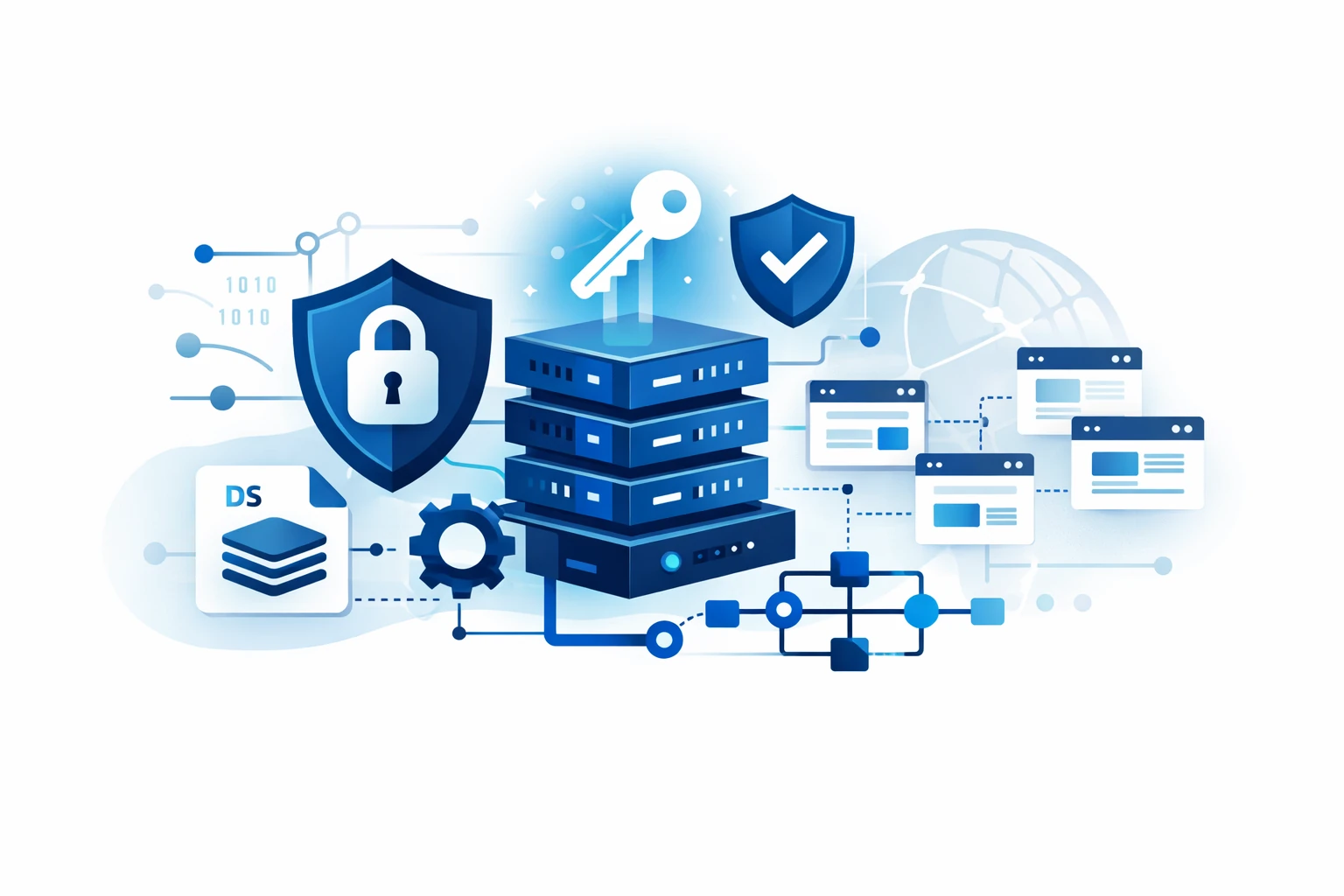
DNSSEC extends the DNS data model with digital signatures and additional record types that enable validation at the resolver. At a high level, the chain of trust looks like this: a signed zone publishes DNSKEY (the zone’s public keys) and RRSIG records (signatures for the zone’s data). The parent zone publishes a DS (Delegation Signer) record that points to the child zone’s DNSKEY, anchoring the trust in the parent. When a resolver queries a domain that is DNSSEC-signed, it uses the DNSKEY and DS to validate the signatures on the responses. If validation succeeds, the resolver accepts the data as authentic; if not, it may treat the response as non-authenticated or fail the lookup, depending on policy. This mechanism relies on a trusted start point—the root zone’s KSK (Key Signing Key) and its associated DS in the root zone—which has historically required careful management and periodic rollover. The RFCs that formalize these constructs (DNSKEY, DS, RRSIG, NSEC/NSEC3) provide the technical foundation for the system. See RFCs and industry overviews for detailed semantics.
Key components to know include DNSKEY (public keys for a zone), DS (the parent’s pointer to the child’s keys), RRSIG (signatures on records), and NSEC/NSEC3 (proofs of non-existence). Together with the root zone and the chain of trust, these elements enable validating resolvers to distinguish legitimate responses from forged ones. This architecture underpins the operational reality that DNSSEC validates data integrity but does not, by itself, conceal the content of DNS queries or responses from eavesdroppers. For foundational context, refer to the IETF RFCs that define DNSSEC data structures and validation semantics, and ICANN’s overview of what DNSSEC is and why it matters.
The validation path in practice
- Zone signing: A zone administrator signs its data with DNSSEC, producing RRSIG records alongside DNS data. These signatures are created with the zone’s private key and can be verified with the corresponding public DNSKEY in the zone.
- DS delegation: The parent zone stores a DS record that points to the child’s DNSKEY, forming a path to the root that can be trusted by resolvers that trust the root keys.
- Resolver validation: When a validating resolver receives a signed response, it follows the chain from root to the zone, checking signatures against the keys and the DS pointers. If any link in the chain is broken (mismatched DS, expired keys, invalid signatures), the resolver cannot validate the data.
The practical upshot: DNSSEC enables end-to-end integrity, but the security properties depend on correct configuration across all levels of the hierarchy. This is why deployment is often described as a portfolio exercise—domains, subdomains, and parent zones must all be configured consistently. For a deeper dive into the technical underpinnings, see RFC-level documentation and ICANN’s DNSSEC resources.
What DNSSEC does not protect: privacy, confidentiality, and some operational realities
One of the most common misperceptions is that DNSSEC protects the content of DNS queries from observation. DNSSEC does not encrypt DNS traffic; it authenticates it. A resolver can still see which domains are being queried, and an observer can often see the size and timing of DNS responses. This limitation is important when evaluating privacy requirements for user data, customer portals, or enterprise communications. Privacy-enhancing strategies—such as DNS over HTTPS (DoH) or DNS over TLS (DoT)—address confidentiality at the transport level, while DNSSEC focuses on integrity and authenticity at the DNS data level. While these technologies can complement one another, they serve different security objectives. ICANN’s DNSSEC overview provides a concise summary of what DNSSEC does and does not cover.
A related practical consideration is that DNSSEC validation is not free from operational risk. If a zone is signed but its DS record is misconfigured in the parent, or if keys are expired or rolled without updating the DS, resolvers may fail validation and return SERVFAIL or non-authenticated answers. Root-zone and KSK management are particularly sensitive areas because they affect the entire ecosystem. Recent discussions around root-zone algorithm rollovers and key management underscore the ecosystem-wide nature of DNSSEC operations. See root-zone-related discussions by ICANN and Verisign for context and ongoing evolutions in key management.
A practical deployment framework: what to deploy, and in what order
Deploying DNSSEC in a way that aligns with privacy expectations and operational reliability involves balancing several factors: proper signing of zones, correct DS branding in parent zones, robust key management, and regular validation testing. Below is a compact, non-exhaustive framework you can adapt to your portfolio. It emphasizes correctness and ongoing verification over merely turning on signing button-clicks.
- Inventory and inventory health check: List all domains in scope, identify which zones are signed, and verify that parent zones hold accurate DS records for each child zone. This step prevents partial signing from undermining the trust chain.
- Sign zones with robust keys: Generate RSA/ECDSA keys with appropriate length and signing algorithms supported by the DNS root and your registry. Keep separate signing keys for signing and rollover planning. Maintain secure key storage and access controls.
- Publish DS records in parent zones: Ensure every signed zone has a corresponding DS entry in its parent. Misalignment here is one of the most common causes of validation failures in production environments.
- Automate and test key rollover: Establish a process for rotating signing keys and updating DS records with minimal disruption. Practice “double-signing” during transitions if your ecosystem supports it, to reduce risk of validation gaps.
- Establish validation monitoring: Regularly test that DNS resolvers in your environment validate responses correctly. Use both in-house tests and external validation tools to detect misconfigurations early.
- Integrate DoH/DoT thoughtfully: If you rely on transport-layer confidentiality, pair DNSSEC with DoH/DoT in a way that preserves end-user experience and does not conflict with validation expectations.
From a portfolio-management perspective, treating DNSSEC deployment as a layered program—with signing, DS maintenance, key management, and validator testing as parallel tracks—helps prevent single points of failure. For teams evaluating how to handle large collections of domains, vendor tooling and cataloging can assist with scale. As a reference point, WebAtla offers catalogues such as domains by country and related tools that can support portfolio-level planning. See WebAtla: countries-domain catalog and WebAtla: pricing for more context on deployment considerations at scale.
Expert insight and common mistakes to avoid
Expert insight: DNSSEC is a powerful integrity mechanism, but its strength is only as good as its lifecycle discipline. The root of many issues is out-of-sync DS records or expired keys in the parent zone, which can cause resolvers to reject otherwise valid data. A disciplined rollover plan that tests every step before production reduces the risk of extended outages. This view aligns with industry discussions on root-zone governance and key management practices published by ICANN and Verisign.
Common mistakes to watch for:
- Failing to publish DS records in the parent zone after signing a child zone. Without DS, the chain of trust cannot be established by validating resolvers.
- Using mismatched or obsolete DNSKEYs in the parent vs. the child zone. This misconfiguration breaks validation and leads to SERVFAIL.
- Neglecting regular key rollover preparation and testing. Rollover is essential but risky if rolled without updated DS entries and validated signatures.
- Assuming DNSSEC provides confidentiality. It does not encrypt DNS queries or responses; for privacy, pair with transport-layer encryption options like DoH/DoT when appropriate.
These pitfalls are widely discussed in DNSSEC governance and practitioner circles; the risk profile grows as zones and portfolios scale. See RFC-guided and ICANN references for broader context on the mechanics and governance surrounding DNSSEC.
Testing, verification, and the practicalities of day-to-day operations
Routine testing is essential to maintain DNSSEC health. Practical checks include: ensuring DNSKEY and DS keys are current, validating that signatures on your zone are consistent with the published DNSKEY, and confirming that parent DS records point to the correct key material. Command-line tools such as dig can perform DNSSEC validations locally (for example, using dig +dnssec your-zone.example). In addition, visual tools and online validators (DNSViz and similar services) can highlight misconfigurations at a glance. While tools vary in depth, the core principle remains: verification must be continuous, not periodic-only. See RFC-based guidance and ICANN’s materials for validation semantics and recommended practices.
Operational resilience also depends on how you handle key rollover and DS management. The root zone, managed by Verisign in coordination with ICANN, has undergone and continues to contemplate algorithm and key-rollovers to strengthen cryptographic hygiene. These processes are complex and ecosystem-wide; they benefit from formal procedures, rehearsed runbooks, and cross-team communication. This ecosystem perspective is highlighted in industry discussions about root KSK rollovers and related governance work.
Limitations and the boundaries of DNSSEC in the broader security stack
Even with DNSSEC properly deployed, organizations should recognize what remains outside its umbrella. DNSSEC addresses integrity and authenticity of DNS data, but it does not provide end-to-end confidentiality, application-layer security, or a complete defense against phishing or credential theft. To optimize security, DNSSEC should be viewed as a component of a multi-layer security strategy that includes transport encryption (DoH/DoT), TLS, certificate validation, secure software supply chains, and robust access controls. A pragmatic approach is to pair DNSSEC with privacy-preserving transport protocols where confidentiality is a requirement and to maintain monitoring and incident response playbooks for DNS-related outages or misconfigurations. The ICANN DNSSEC overview provides a succinct summary of these boundaries.
Case study: a hypothetical small business DNSSEC deployment and its privacy posture
Consider a small business with a modest portfolio of 15 domains across a handful of subdomains. The business signs each zone, publishes DS records in its parent zone, and implements a quarterly key-rotation schedule. It also deploys DoT for internal services to protect confidentiality at the transport layer, while relying on DNSSEC for data integrity at the DNS layer. The team uses a validation-monitoring workflow to detect misconfigurations early and applies versioned rollovers with pre-verification steps before making production changes. This approach illustrates how a privacy-conscious deployment can be practical and resilient for a small to mid-sized organization. For teams managing larger portfolios, the same principles scale with automation and standardized runbooks.
Conclusion: DNSSEC as a foundation, not a privacy panacea
DNSSEC is a critical building block in the modern security stack, providing integrity and authenticity guarantees that help prevent DNS-based attacks such as cache poisoning and spoofing. However, it is not a privacy solution. To meet contemporary privacy expectations, organizations should pair DNSSEC with transport-layer encryption and robust data governance practices, while maintaining rigorous lifecycle management for keys and DS records. A well-architected DNSSEC program—grounded in discipline, testing, and cross-team collaboration—delivers tangible security benefits without overclaiming what DNSSEC can and cannot do. As industry organizations like ICANN and Verisign illuminate, the ecosystem benefits from careful planning around root-zone governance, key rollovers, and continuous validation.
Appendix: quick-reference checklist
- DNSSEC sign-off: zone is signed and RRSIGs exist for all relevant records.
- DS publication: every signed zone has a matching DS record in its parent.
- Key management: signing keys and KSK/ZSK practices are documented and rotated as planned.
- Validation testing: regular local and remote validation checks run automatically.
- Privacy posture: DoH/DoT considered where confidentiality is required; DNSSEC remains separate for data integrity.
- Portfolio considerations: for large domain portfolios, consider cataloging domains by country and other attributes to guide security strategy; see WebAtla as a supplementary resource for domain lists and portfolio insights.