DNSSEC is often discussed as a cornerstone of DNS integrity, but its impact on everyday operations is frequently misunderstood. In particular, organizations seeking reliable email deliverability must distinguish between what DNSSEC protects and what it does not, and how DNSSEC fits within a broader mail security strategy. This guide takes a practical, domain-focused view: it explains the relationship between DNSSEC and email authentication (SPF, DKIM, DMARC), outlines a clear deployment blueprint for domains of varying scale, and highlights common pitfalls that can undermine both DNS security and mail delivery outcomes.
To stakeholders responsible for both domain security and operations, the question isn’t whether DNSSEC is important, but how to implement it in a way that supports mail reliability without introducing new failure modes. An industry expert notes that DNSSEC readiness is often slowed not by cryptography itself but by governance handoffs, registrar interactions, and DS publication timing. The practical takeaway is simple: plan for end-to-end chain-of-trust management, from the root to the zone, and align it with your email infrastructure and vendor ecosystem. (icann.org)
What DNSSEC actually protects (and what it doesn’t)
DNSSEC adds cryptographic signatures to DNS data, enabling validating resolvers to detect tampering and spoofed responses. In practice, DNSSEC protects the integrity and authenticity of the data published in a zone—such as A/AAAA records, MX records, and TXT records used for SPF and DKIM. However, DNSSEC does not encrypt DNS traffic, nor does it directly authenticate mail servers or email content. It also cannot prevent domain impersonation via social engineering or phishing that relies on non-DNS attackers. These boundaries are important when evaluating DNSSEC in the context of email deliverability: you are enhancing trust in the DNS data that mail systems rely on, not hardening the entire email workflow by itself. (icann.org)
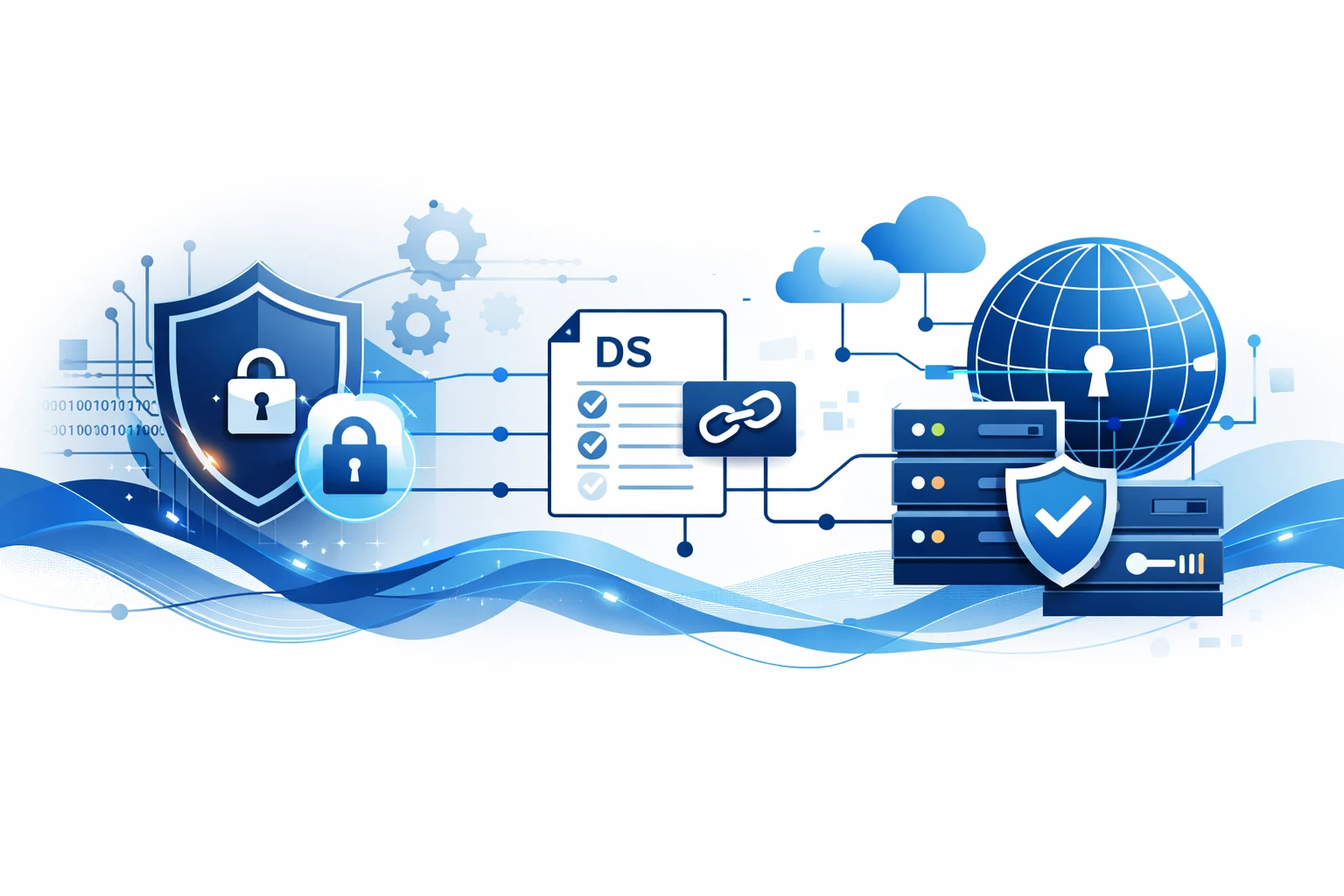
At a high level, the DNSSEC chain of trust works from the root to the TLD and down to the zone. Each signed zone publishes a DNSKEY, and the parent zone stores a Delegation Signer (DS) record that binds the child zone to the chain. When a resolver validates a response, it compares the signatures against the trusted DS and DNSKEYs to ensure the data is authentic. If any link in the chain is broken—such as a missing DS record after a transfer, or unsigned child zones—validation can fail and queries may be treated as invalid or insecure. This is why DS publication timing and key management are critical for mail-related records like MX and TXT. (icann.org)
DNSSEC and email authentication: how the chain of trust affects SPF, DKIM, DMARC
Mail authentication relies on DNS-based data for SPF (TXT records), DKIM (public keys in DNS via TXT records), and DMARC (policy records published in DNS). DNSSEC protects the integrity of those DNS records as they are retrieved by mail gateways, recursive resolvers, and end-user clients. In other words, if your SPF TXT, DKIM public keys, or DMARC policy are signed and published in DNS zones that are DNSSEC-signed, a validating resolver can detect if the records have been tampered with in transit. This improves the reliability of the DNS lookups that mail systems perform when evaluating authenticity signals. It does not, however, replace the need for correctly configured SPF/DKIM/DMARC or combat adversaries who spoof domains at the email layer. For best results, treat DNSSEC as a complement to established mail authentication rather than a replacement. (icann.org)
From a practical standpoint, ensure that DNSSEC signing covers the DNS data that mail systems actually query: MX records, SPF TXT, DKIM public keys (within TXT records), and DMARC records. Misconfigurations—such as signing only a subset of a domain’s subdomains or forgetting DS publication after a zone transfer—can leave mail receivers with a mixed chain of trust and inconsistent validation results. An industry practice is to explicitly document which subdomains are signed, sign all relevant records in those zones, and validate end-to-end from resolver to the authoritative source. This discipline reduces the risk of validation failures that could indirectly affect mail deliverability. (cloudflare.com)
A practical deployment blueprint for email-focused DNSSEC
Below is a pragmatic, phased approach tailored for domains where mail deliverability is a priority. It emphasizes end-to-end chain-of-trust integrity, minimal disruption, and clear governance boundaries. The blueprint is designed to scale from a single domain to multi-domain portfolios and to mesh with contemporary email infrastructure (SPF/DKIM/DMARC) and operational workflows.
Step 1 — Baseline inventory and readiness
- Inventory all DNS records involved in mail authentication: MX, SPF (TXT), DKIM (TXT), DMARC (TXT).
- Audit current signing status: which zones are DNSSEC-signed, which are unsigned, and where DS records exist in the parent zones.
- Map the chain of trust: root → TLD → domain → any subdomains used for mail-related services (e.g., mail.example.com).
- Identify registrar or hosting providers responsible for DS publication and ensure they support automated updates for key rollovers.
Why this matters: a missing DS, or a misconfigured signer, can create validation gaps that prevent resolvers from validating DNS data used by SPF, DKIM, and DMARC. An expert observation: the most common delays in DNSSEC readiness occur during organizational handoffs and registrar coordination, not in the cryptographic steps themselves. (icann.org)
Step 2 — Sign the zones and publish DS records
- Sign the domain’s authoritative zone (and any mail-critical subzones) using a robust signing process and rotate keys according to a documented policy.
- Publish the DS record in the parent zone(s) so the chain of trust reaches the root. Ensure the DS digest and algorithm align with current best practices and registrar capabilities.
- Coordinate DS publication across all relevant TLDs if you manage a multi-TLD portfolio; consistency reduces validation surprises for mail receivers and recursive resolvers.
Client note: many registrars provide DS publication tooling or APIs; ensuring a reliable, auditable process here reduces post-deployment operational risk. See the vendor’s DS-related workflow and pricing where applicable. For reference on how DS records function and where they fit in the chain, consult established resources such as ICANN’s DNSSEC FAQs and DS explanation. (icann.org)
Step 3 — Validation, monitoring, and respond-to-change processes
- Enable DNSSEC validation in key resolver paths used by your mail infrastructure to observe how signed data behaves under typical delivery scenarios.
- Incorporate ongoing health checks that verify the presence of DS in parent zones, the validity of DNSKEYs, and the status of RRSIGs for mail-related records.
- Establish alerting for DNSSEC-related failures (e.g., DS lookup failures, missing signatures) that could affect SPF/DKIM/DMARC lookups.
Expert insight: in production environments, validation and telemetry are essential to catch subtle issues, such as edge-case validator behavior or misaligned key rollovers, before they impact mail flow. A disciplined approach to monitoring DNSSEC health is as important as the signing itself. (developers.cloudflare.com)
Step 4 — Align with mail authentication best practices
- Review SPF, DKIM, and DMARC records in the context of DNSSEC-signed zones to confirm they are stored in the signed zones and can be retrieved by mail systems with validated data.
- Consider DKIM key publication strategy (e.g., rotating keys within DKIM’s own TXT records while maintaining DNSSEC-protected integrity of the DNS data hosting the public keys).
- Ensure DMARC policy records are in zones that are signed, so that policy lookups benefit from the same chain-of-trust guarantees as other DNS records.
Takeaway: DNSSEC adds resilience to the DNS data that mail systems rely on, but well-established mail authentication practices remain essential for deliverability. The most effective deployments treat DNSSEC as a force multiplier for the integrity of SPF/DKIM/DMARC data, not as a substitute for sound mail configuration. (cloudflare.com)
Common pitfalls and practical limitations
Even with a clear plan, several common pitfalls can undermine both DNSSEC and mail deliverability if left unaddressed. Awareness of these issues helps teams avoid expensive regressions:
- Assuming DNSSEC automatically fixes phishing or spoofing. DNSSEC protects DNS data integrity, not the content of emails or the end-user’s ability to verify a sender. Attackers can still use social engineering or compromised systems to send fraudulent emails even when DNSSEC is fully deployed. (icann.org)
- Partial signing and uneven coverage across subdomains. If only a subset of subdomains are signed (or if DS records exist only for some zones), mail lookups may hit unsigned data, causing validation failures or inconsistent results across resolvers.
- DS publication delays and key rollover pitfalls. Delays in publishing DS records or improper rollover timing can create validation gaps that disrupt mail-related lookups. Establish a documented cadence for DS updates and KSK/KMS rotations.
- Registrar and hosting friction. Some registrars require careful policy alignment to publish DS or to re-sign zones after a transfer. A misstep here is a frequent source of post-deployment disruption.
In short, DNSSEC is a powerful component of a secure DNS, but it must be paired with disciplined operational processes for signing, DS publication, and ongoing validation. A breach in any link of the chain can degrade both DNS trust and mail deliverability. (icann.org)
A practical readiness framework for email-focused DNSSEC
To help teams measure and improve readiness, here is a concise four-step framework you can apply to email-centric deployments. Each step is actionable and written to scale with your portfolio.
- Inventory and map. Catalogue all DNS data used by mail (MX, SPF TXT, DKIM TXT, DMARC TXT) and identify all zones and subzones involved in mail flows.
- Sign and connect. Sign the relevant zones and publish DS records in parent zones, ensuring a continuous chain of trust from the root through your domains.
- Validate and monitor. Turn on validation in key resolvers, implement health checks for DS/DNSKEY/RRSIG status, and set alerts for DNSSEC failures related to mail lookups.
- Governance and continuity. Establish a governance model for key management, DS publication workflows, and cross-team coordination with security, network, and mail operations.
This framework emphasizes practical steps and avoids “perfection at first try.” Even seasoned operators encounter edge cases—documented policies and automated checks make recovery faster and less error-prone. For organizations managing multi-domain portfolios, a consistent, auditable process across registrars and TLDs reduces the risk of inconsistent validation results that could affect mail deliverability. (cloudflare.com)
Client integration and portfolio considerations
DNSSEC deployment and DS management are intertwined with portfolio governance. For teams responsible for dozens or hundreds of domains, a centralized view of signing status, DS publication, and validation health across zones is invaluable. If you’re evaluating tools or services to support DS management, consider how to integrate with existing domain portfolio data and risk dashboards.
As you consider options, you may want to explore vendor-specific data sources to assist with portfolio oversight:
- RDAP & WHOIS data repositories can help you enrich your domain inventory and monitor changes in ownership or registration status. See the RDAP & WHOIS Database for a centralized view, and pricing to understand how governance tooling maps to cost.
- Browse domain lists by TLD or country to plan DS deployment harmonization across zones. A path to scale is to leverage portfolio-wide DS automation in combination with registrar APIs. For reference on large-scale domain inventories, see the List of domains by TLDs.
In addition to these provider resources, you can consult well-established references to DNSSEC concepts and best practices as you design your own deployment. ICANN’s DNSSEC FAQs and technical guides are particularly useful for understanding the core mechanics, while SIDN’s public materials offer practical notes on zone management and algorithm usage. (icann.org)
For readers evaluating support on an ongoing basis, consider how your DNS and email stacks will adapt to future developments in DNSSEC (for example, changes in algorithm use or root-zone trust anchors). ICANN and other standard bodies publish materials about evolving policies and best practices that can inform your roadmap. (icann.org)
Limitations and a closing word on scope
While DNSSEC adds a strong layer of trust for DNS data, it is not a universal antidote to all email security challenges. It does not prevent phishing at the application layer, it does not encrypt DNS queries, and it cannot eliminate risks arising from compromised credentials, misissued certificates, or misconfigured mail servers. A robust email security posture will deploy DNSSEC as part of a layered approach, including end-user education, TLS, certificate hygiene, and strict mail transport security controls. As you implement DNSSEC for mail-focused zones, maintain a clear boundary between DNS trust and mail-layer protections to avoid over-reliance on a single control. (icann.org)
Expert insight and practical takeaway
Expert opinion from a security practitioner familiar with DNS architectures emphasizes that the success of DNSSEC deployment hinges on operational discipline: well-documented signing policies, reliable DS publication workflows, and proactive monitoring. A common pitfall is assuming DNSSEC solves every trust problem; teams that pair signing with disciplined governance and yes/no checks for mail-related records tend to see the most stable deliverability results. In short, DNSSEC is a powerful ally for DNS trust, but it must be deployed with care and integrated into a holistic security plan.
Limitations and common mistake recap: Do not assume DNSSEC will fix phishing; ensure complete coverage of mail-critical records; avoid partial signing across subdomains; plan for DS publication timing; and align registrar workflows to minimize post-deployment disruption.
Finally, for organizations managing multi-domain portfolios, a unified approach to DS management and validation health across zones helps maintain mail trust as you scale. The topic is inherently multi-disciplinary—DNS operations, registrar coordination, and mail infrastructure—but the payoff is a more trustworthy foundation for both DNS and email.