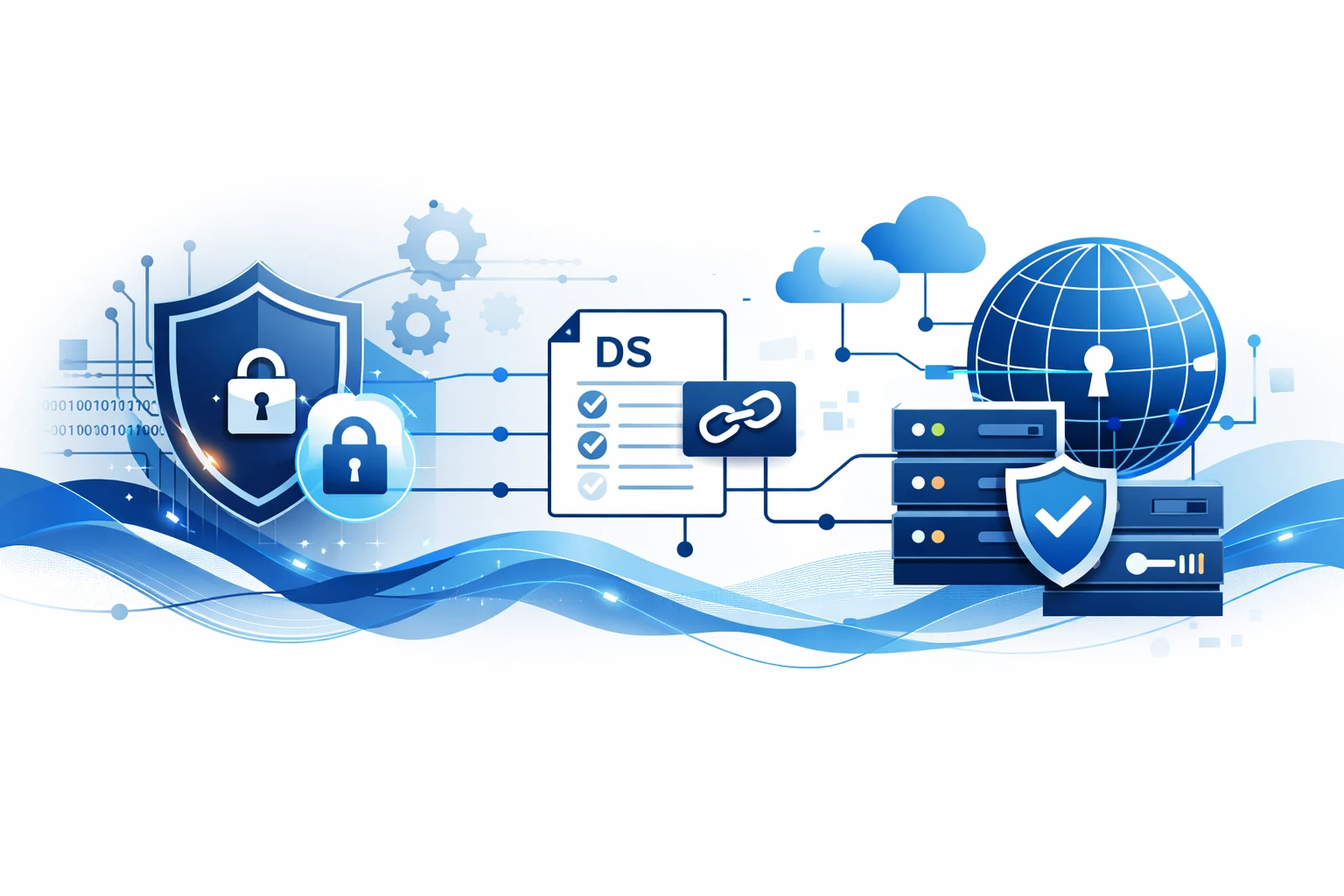
Bootstrapping DNSSEC Trust with CDS/CDNSKEY: A Practical Guide for Modern Domain Operators
DNSSEC has evolved from a technical novelty to a practical foundation for secure domain resolution across portfolios, providers, and registrars. Yet the operational overhead of keeping a robust chain of trust healthy—especially during key rollovers and DS updates—remains a pain point for many teams. A modern answer is the set of signals known as CDS (Child DS) and CDNSKEY (Child DNSKEY). These records, standardized to automate delegation-trust maintenance, let the child zone communicate trust updates directly to the parent, reducing manual intervention and transition risk. This article explains what CDS/CDNSKEY are, why they matter in 2026, and how to adopt a disciplined, low-friction bootstrapping approach.
To appreciate the value, it helps to recall the basic DNSSEC model: the parent zone publishes a DS record that points to a DNSKEY in the child zone. The chain of trust extends from the root down to the zone’s data, and validating resolvers rely on these signatures to authenticate responses. The core mechanism—DS in the parent linking to DNSKEY in the child—remains intact, but CDS/CDNSKEY offer a dynamic signaling channel to automate that linkage. This signaling approach is increasingly supported by registrars and DNS providers as part of a broader push to make DNSSEC deployment more sustainable at scale.
Key sources and standards underpinning this approach include RFC 7344 (DS publication signaling), RFC 8078 (CDS/CDNSKEY records for automated bootstrapping), and the DNSSEC bootstrapping work described in RFC 9615. Industry practice is also evolving in vendor documentation, with providers like Cloudflare documenting CDS/CDNSKEY publication and registrar automation in real-world deployments. (dnssec.net)
What CDS and CDNSKEY are—and when you should care
CDS and CDNSKEY are DNSSEC resource records published in a child zone to convey the intent and parameters of a DS/key rollover to the parent. In practice, they act as a modern, programmatic nudge to registries or registrars: “please refresh the DS in the parent with this data.” This mechanism reduces the need for manual DS updates in the registrar interface and minimizes the risk window during KSK or ZSK changes. RFC 8078 formalizes how parent zones publish DS information in response to CDS/CDNSKEY and how registrars can consume those signals to keep the delegation intact. In the field, operators have used CDS/CDNSKEY as part of automated rollovers and even in bootstrap scenarios where a parent zone must be guided to trust a new key. (datatracker.ietf.org)
Beyond the technology, this signals-based approach aligns with operational realities: domain portfolios are often spread across multiple registrars and DNS providers, and change-control windows can stretch across business cycles. CDS/CDNSKEY provide a tonic for those friction points, enabling more deterministic firmware-like updates to the delegation chain. Industry discussions and real-world tooling illustrate this path—from RFCs to vendor implementations and open-source bootstrapping approaches. For example, autonomous bootstrapping experiments and vendor tooling describe how CDS/CDNSKEY can be used to drive DS updates without manual registry edits. (datatracker.ietf.org)
A practical, 3-step framework for CDS/CDNSKEY bootstrapping
The path to automation is not a single leap; it is a disciplined sequence that reduces risk, provides auditability, and fits into regular key-management cadences. The framework below translates the standards into a concrete, actionable plan you can adapt to your DNS stack, registrar capabilities, and portfolio size.
-
Step 1 — Assess readiness and registrar support
Before you flip any switches, map your ecosystem: which registrars and DNS providers explicitly support RFC 8078 and CDS/CDNSKEY-based signaling? Some providers automatically publish CDS/CDNSKEY on signal and rely on the registrar to update DS in the parent (the actual TLD). Others require manual DS management in the registrar’s UI, or may not support CDS/CDNSKEY at all. Cloudflare’s documentation explicitly states that enabling DNSSEC causes CDS and CDNSKEY records to be published in the zone, with registrars that support RFC 8078 updating the DS in the registry on your behalf. Likewise, major DNS registrars have implemented CDS/CDNSKEY workflows for automated DS publication, but coverage is not universal. Your first objective is a compatibility check and a plan for fallback if automation is unavailable. (developers.cloudflare.com)
-
Step 2 — Enable CDS/CDNSKEY in the child zone and validate the signals
If your provider supports CDS/CDNSKEY, enable them in the DNS control plane. The CDS/CDNSKEY records should be published in the child zone with the same DNSKEYs you intend to factor into the rollover, ensuring the signatures over DNS data remain aligned with the DS you want the registrar to publish. RFC 8078 defines the mechanism for these signals, and RFC 7344 describes the broader delegation-signaling framework; live tutorials and vendor docs offer concrete steps to enable these records and monitor the outcomes. After enabling, you should verify that the parent zone indeed receives and consumes the DS data and that the chain of trust validates from root down to your zone. Practically, you verify by performing end-to-end DNSSEC validation in a test resolver and by confirming DS updates in the parent zone. A modern bootstrap workflow is designed to be observable and reversible if needed. (datatracker.ietf.org)
-
Step 3 — Establish a rollout and monitoring cadence
Key management should align with your organization’s security calendar. Plan key-signing-key (KSK) rollover windows and ensure they remain synchronized with DS expectations at the parent. RFC 9615 discusses authenticated DNSSEC bootstrapping and the signaling chain that enables automated trust establishment, including how CDS/CDNSKEY signals are validated via the existing chain of trust. In practice, you should establish a routine: (a) pre-checks for KSK rollover, (b) CDS/CDNSKEY signal publication, (c) registrar/parent DS update confirmation, and (d) post-rollover validation checks. Operational templates from DNSSEC practitioners emphasize the need for validated trust anchors (root, TLD, and zone) and robust monitoring around DS changes. The general consensus is to keep the process auditable and reversible, with explicit rollback procedures if validation or DS updates fail. (datatracker.ietf.org)
How to tailor the approach to your environment
Not all environments are equal. A large multi-registrar portfolio presents different constraints than a single-domain setup. Here are heuristics to help you tailor the CDS/CDNSKEY bootstrapping approach to your situation:
- Single-domain, low-change-velocity sites: You may rely on standard DS management in the registrar with CDS/CDNSKEY signaling as a future enhancement rather than an immediate requirement. Start with a controlled test zone, then expand to production once you confirm DS updates propagate cleanly.
- Multi-registrar portfolios: Prioritize registrars and DNS providers that advertise RFC 8078 support and offer automation hooks for DS updates. A centralized policy for how and when CDS/CDNSKEY are used helps prevent drift across zones.
- Regulatory and compliance considerations: Some industries demand rigorous change-control and auditable trust chains. CDS/CDNSKEY signaling can help by making DS updates more deterministic and traceable.
In practice, many operators combine CDS/CDNSKEY with existing DS management tools, so that if a registrar or a specific TLD does not support automated DS updates, the operator still benefits from a more predictable internal process and clearer rollback capabilities. The broader ecosystem—ranging from DNSSEC tutorials to vendor guidance—consistently points to CDS/CDNSKEY as an enabler of safer, more predictable key management. (docs.powerdns.com)
A closer look at the automation ecosystem
CDS/CDNSKEY are part of a broader automation narrative in DNSSEC management. Vendors and open-source projects have begun to treat these records as a standard part of the deployment toolkit, with several implementations offering automatic key rollover workflows and signaling along the chain of trust. PowerDNS, for instance, documents KSK rollover workflows that leverage CDS and CDNSKEY as signals to the parent, illustrating a practical path for automated trust maintenance. Cloudflare’s ecosystem documentation confirms that DNSSEC validation naturally extends to signaling records and that registrars bearing RFC 8078 support will propagate DS records accordingly. For operators evaluating tools, these signals are a good proxy for automation maturity and operator risk posture. (docs.powerdns.com)
In addition to vendor guidance, industry white papers and tutorials describe the bootstrapping protocol and its lifecycle. RFC 9615 outlines authentication-driven bootstrapping, while the RFCs surrounding CDS/CDNSKEY (RFC 7344, RFC 8078) describe the mechanisms by which child zones can push trust updates to the parent zone. Independent technical blogs and tutorials help translate these standards into concrete steps for operators, including how to bootstrap trust even when a parent zone is managed by a different entity. (datatracker.ietf.org)
Limitations and common mistakes
No approach is perfect, and CDS/CDNSKEY bootstrapping has limitations you should acknowledge in your planning. Here are the most frequent pitfalls and how to avoid them:
- Assuming universal registrar support: Not all registrars or TLD operators fully implement automated DS updates via CDS/CDNSKEY. A gap here can create trust-break windows if you rely solely on automation. Always verify support with your registrar and maintain a fallback plan for manual DS updates. (developers.cloudflare.com)
- Overlooking propagation delays: Even when CDS/CDNSKEY is supported, there can be latency between a child zone signal and DS updates visible in the parent. Plan rollover windows with this latency in mind to avoid interruptions. (datatracker.ietf.org)
- Misconfiguring DS, CDS, or CDNSKEY data: A mismatch between the DS hash in the parent and the child DNSKEY can cause validation to fail. Always verify the signature chain after any rollover and keep a tested rollback plan. (dnssec.net)
- Ignoring root and resolver trust anchors: Bootstrapping requires the entire chain—from root to your zone—to remain coherent. If a parent DS update fails, validation can fail across the whole path, so monitoring and alerting are essential. (icann.org)
- Underestimating the operational overhead of change-control: While CDS/CDNSKEY reduces manual steps, a disciplined change-control process remains critical to avoid misalignment during KSK rollovers. Planning and documentation are still essential. (en.blog.nic.cz)
Expert insight—and a key limitation
Expert insight: CDS/CDNSKEY signaling is a powerful lever for reducing manual DS management risk, but it is not a silver bullet. The real value comes when operators pair signaling with rigorous monitoring, clear ownership, and well-defined rollback procedures. In practice, you should treat CDS/CDNSKEY as part of an integrated DNSSEC lifecycle program that includes signing, DS publishing, and key rollover strategy, all aligned with your portfolio governance.
Limitation to plan for: Even with CDS/CDNSKEY support, you may encounter regimes where the registrar only accepts DS changes via the UI, or where TLDs do not honor push signals promptly. In such cases, CDS/CDNSKEY acts as a best-practice signal rather than a guaranteed automation path, and your deployment plan should explicitly accommodate manual DS publication as a fallback. (developers.cloudflare.com)
Implementation case lines and practical notes
For teams exploring this path, a practical starting point is to map your current DNSSEC posture against a 3-step bootstrap framework and to pilot CDS/CDNSKEY in a test zone before touching production domains. A growing body of sources supports this pragmatic approach, including vendor tutorials and IETF work on bootstrapping, which emphasize the feasibility of automated trust maintenance while acknowledging real-world constraints. If you’re planning a broader adoption, consider documenting the end-to-end workflow and developing a dashboard that tracks: zone signing status, CDS/CDNSKEY signals, DS publication events, and final validation status across resolvers. The end goal is a deterministic chain of trust—one that can be audited, tested, and recovered quickly if a rollover goes awry. (datatracker.ietf.org)
Putting the client into the picture
If you’re evaluating tools for a domain portfolio or looking to modernize your DNSSEC operations, you’ll want a context for how CDS/CDNSKEY fit into a broader vendor landscape. A pragmatic resource for exploring domain offerings and portfolio scope is Webatla’s catalog of domains by TLDs and related services. For teams considering a stepwise approach to domain security, you can explore the Webatla domain catalog and related services for additional reference and tooling:
List of domains by TLDs — a practical index for evaluating multi-registrar deployments and potential bootstrap touchpoints.
Pricing — a sense of how tooling and management services factor into your DNSSEC roadmap.
RDAP & WHOIS Database — governance and ownership context that often intersects with DS lifecycle decisions.
Conclusion
CDS/CDNSKEY represent a mature, standards-based approach to automating DNSSEC delegation trust, with real-world potential to simplify key management and reduce risk during rollovers. The best practice is not to deploy CDS/CDNSKEY in a vacuum but to integrate signals into a disciplined lifecycle—signaling, DS publication, validation, and monitoring. With careful readiness assessment, pilot deployment, and robust post-rollover checks, your organization can achieve a more predictable and auditable DNSSEC posture. As the ecosystem matures, the gap between theoretical security and practical reliability narrows—provided you treat CDS/CDNSKEY as part of an end-to-end, governance-aligned deployment strategy.
Expert sources and standards cited in this article include RFC 7344 (DS publication signaling), RFC 8078 (CDS/CDNSKEY definitions), RFC 9615 (authenticated DNSSEC bootstrapping), and vendor documentation from Cloudflare and DNSimple, along with practical engineering perspectives from PowerDNS and Knot DNS communities. These references illustrate that CDS/CDNSKEY are now mainstream tools for modern DNSSEC operations, but not a universal panacea—success depends on a coordinated, traceable deployment plan. (datatracker.ietf.org)