Introduction: the new frontier for DNSSEC and dynamic subdomains
DNSSEC is often introduced as a blanket security layer for a single domain. In modern software as a service (SaaS) and DevOps environments, however, a single company may issue tens, hundreds, or even thousands of subdomains on demand for customers, tenants, or ephemeral environments. The challenge is not merely signing zones; it is maintaining the chain of trust as subdomains come and go, while ensuring resolvers can validate responses without service disruption. This is where automation becomes essential, not optional. DNSSEC automation for dynamic subdomains is about closing the loop between zone signing, parent-zone delegation, key management, and continuous validation. In practice, automation hinges on established standards for child-to-parent signaling and trusted delegation maintenance. (datatracker.ietf.org)
Core concepts refresher: what you must know to automate safely
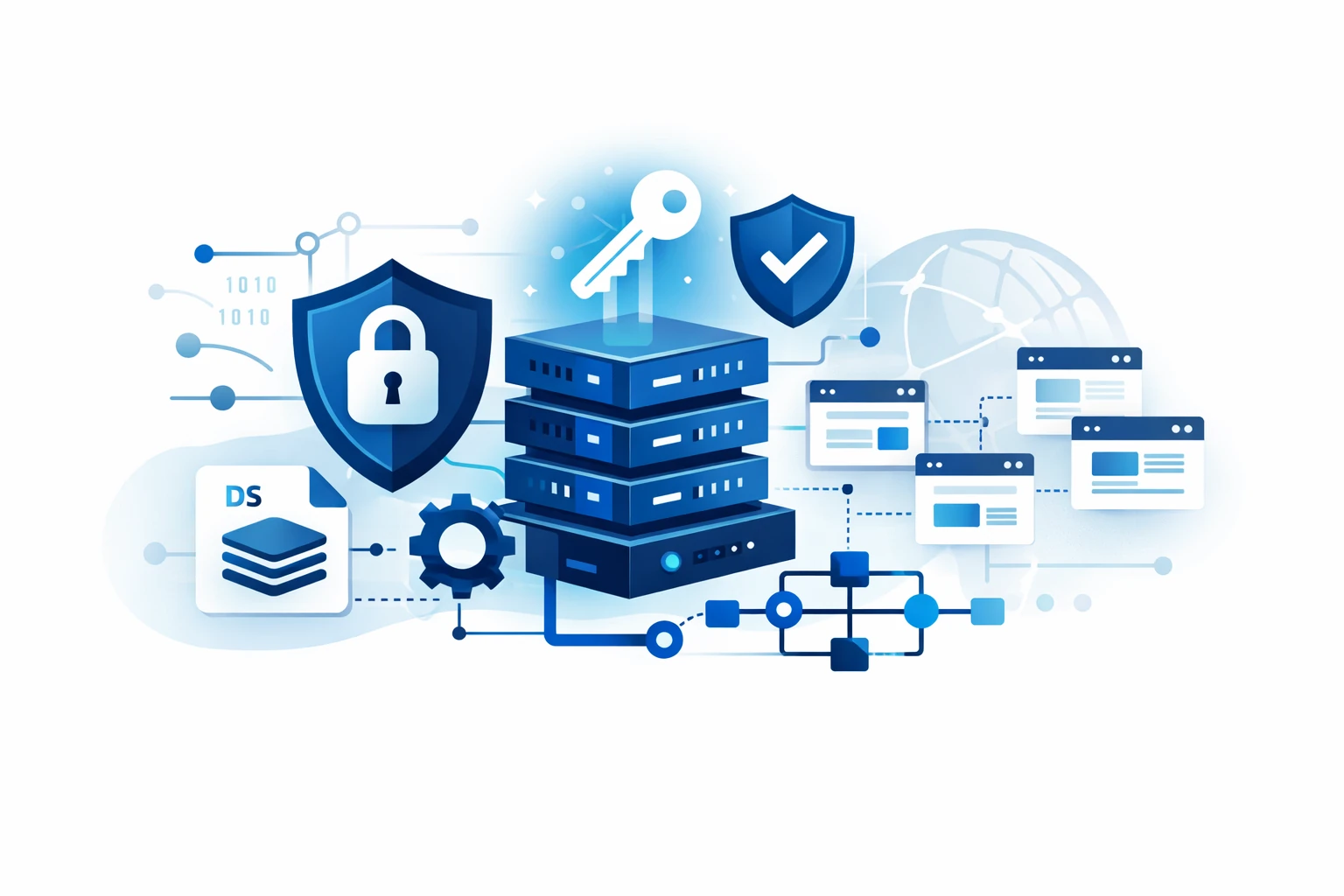
DNSSEC introduces a few cryptographic constructs that underpin the security model: DNSKEY (keys used to sign zones), DS (the delegation signer record published in the parent zone), and RRSIG (the signature over DNS data). When the parent zone asserts trust in the child zone, it does so by storing DS records that correspond to the child’s DNSKEY. This binding is what validates responses for clients that perform DNSSEC validation. The standard references for these concepts are RFC 4033 (DNS Security Introduction), RFC 4034 (DNSSEC resource records, including DNSKEY and DS), and RFC 4035 (operational practices). (rfc-editor.org)
Beyond the basics, modern operational guidance emphasizes practical deployment and ongoing maintenance. RFC 6781, “DNSSEC Operational Practices,” documents recommended operational practices for signing, key management, and zone maintenance. This is particularly relevant when you scale DNSSEC across many subdomains or dynamic environments. (datatracker.ietf.org)
Automation options: manual DS vs CDS/CDNSKEY-driven automation
Historically, DS records were entered manually in parent zones. This approach becomes brittle at scale and is error-prone when subdomains are created or terminated frequently. The industry has increasingly standardized on automation mechanisms to streamline delegation management. Two widely adopted automation streams are:
- CDS/CDNSKEY-based automation: The child zone publishes CDS (Child DS) and CDNSKEY (Child DNSKEY) records in the zone itself. A registrar or registry can poll for these records and propagate the corresponding DS records to the parent zone, updating the delegation chain automatically. This pattern is codified in RFC 7344 (Delegation Trust Maintenance) and RFC 8078 (Managing DS Records from the Parent via CDS/CDNSKEY). (datatracker.ietf.org)
- Registrar/registry automation with CDS/CDNSKEY support: Some providers implement CDS/CDNSKEY signaling and automatically translate child signals into DS records at the registry level. When implemented well, this reduces latency between a zone being signed and its DS record appearing in the parent zone. Modern operator tooling often includes CDS/CDNSKEY hooks as part of DNSSEC provisioning, as described by Cloudflare’s documentation and various registry implementations. (developers.cloudflare.com)
Choosing an automation path depends on your control plane, registrar capabilities, and how quickly you need DS updates to propagate across global TLDs. In practice, many teams adopt a hybrid pattern, using CDS/CDNSKEY where supported and fall back to manual DS updates where automation isn’t available. For teams that rely on dynamic subdomains, automation is less a luxury and more a requirement to avoid trust gaps and failed resolutions. (developers.cloudflare.com)
Key mechanism: how CDS/CDNSKEY-based automation works
The core idea is straightforward in concept but requires careful implementation. A DNSSEC-capable child zone advertises what DS or key material it wants the parent zone to publish. The parent (or registrar acting on behalf of the parent) then updates the DS in the parent zone to reflect the child’s current signing material. This end-to-end signaling is formalized in RFC 7344 and RFC 8078. In practice, the child can signal a new key (for rollover) or signal that DNSSEC should be disabled (for decommissioning a subdomain), and the parent updates accordingly. This approach is the primary mechanism enabling scalable, dynamic DNSSEC deployments. (datatracker.ietf.org)
For teams considering automation, it’s important to recognize an important nuance: CDS/CDNSKEY signaling does not finalize itself in the parent zone unless the parent zone accepts and publishes the DS data. Some registrars implement this automatically, while others require policy approvals or additional steps. Cloudflare’s DNS documentation describes the automatic publication of CDS/CDNSKEY in compatible setups, illustrating a practical implementation path for many operators. (developers.cloudflare.com)
Architectural patterns for dynamic DNSSEC in practice
Below are two pragmatic patterns often observed in production environments dealing with dynamic subdomains and multi-tenant services:
- Pattern A: centralized DNS management with CDS/CDNSKEY signaling – A central DNS management layer signs the zone and publishes CDS/CDNSKEY records. A registrar/registry then reads those signals and updates the DS in the parent zone. This pattern emphasizes a single source of truth for signing keys and consistent DS propagation across all relevant parent zones. RFC 7344 and RFC 8078 provide the formal basis for this approach. (datatracker.ietf.org)
- Pattern B: registrar/registry automation with parent signaling – Some providers implement automated DS propagation at the registry level, triggered by CDS/CDNSKEY signals. In this model, the child zone can delegate the DS publishing task to the parent infrastructure, reducing the operational burden on the signatory. Cloudflare’s documentation and registry examples illustrate how CDS/CDNSKEY signaling can drive automatic DS updates in the parent zone. (developers.cloudflare.com)
Whichever pattern you choose, you should design for the dynamic lifecycle of subdomains: creation, signing, key rotation, decommissioning, and reallocation. RFC 6781 emphasizes operational best practices for these tasks, including key management and validation workflows that minimize disruption. (datatracker.ietf.org)
A practical, step-by-step playbook for dynamic subdomains
Use this framework when you’re architecting DNSSEC for a SaaS or DevOps environment with frequent subdomain creation and destruction.
- Step 1 — Inventory and mapping: Catalogue all subdomains issued per tenant, environment, or feature flag. Map which zones you sign, which delegate to parent zones, and which registrars or registries control each parent DS delegation. This inventory informs what automation signals you need and where to implement them. Expert insight: a clear map reduces the risk of stale DS records or orphaned subdomains that fail validation. (datatracker.ietf.org)
- Step 2 — Choose an automation strategy: Decide whether to rely primarily on CDS/CDNSKEY automation (RFC 7344/8078) or to leverage registrar/registry automation where supported. Consider registrar capabilities, ecosystem support, and latency in DS propagation. If you sign many subdomains quickly, CDS/CDNSKEY signaling is typically the most robust option. (datatracker.ietf.org)
- Step 3 — Implement signing and signaling: Ensure each subdomain zone is cryptographically signed with a DNSKEY and that a corresponding CDNSKEY/CDS signal is generated for new keys or key updates. When you rotate keys, emit a new CDNSKEY/CDS pair and prepare the DS update in the parent zone. RFC 7344 and RFC 8078 provide the formal behaviors for these transitions. (datatracker.ietf.org)
- Step 4 — Ensure DS publication readiness: Confirm that parent-zone DS publication is enabled for all TLDs you depend on. Many TLD operators and registrars support automated DS updates via CDS/CDNSKEY, but coverage varies. Cloudflare’s guidance demonstrates a practical, modern approach to automatic DS propagation in compatible ecosystems. (developers.cloudflare.com)
- Step 5 — Validation and monitoring: Regularly validate that DNSSEC is intact across subdomains and that DS records in parent zones match the child DNSKEYs. Use DNSSEC validators, DNSViz, and command-line tools (dig +dnssec) to verify chain-of-trust. RFC 6781 and general DNSSEC best practices describe these validation workflows. (datatracker.ietf.org)
- Step 6 — Key management discipline: Establish a key rollover schedule (for example, semi-annual or annual KSK rotations) and document procedures for initiating rollover, signaling updates, and handling potential failures. RFC 6781 and RFC 4034 outline the cryptographic components you must manage and how to rotate them without breaking validation. (datatracker.ietf.org)
- Step 7 — Incident readiness: Define rollback and remediation steps in case DS propagation lags or validation fails. Maintain a playbook that covers decommissioning subdomains, emergency DS removal, and safe fallback configurations. This is in line with operational practice guidance from RFC 6781. (datatracker.ietf.org)
A concrete framework you can adopt today
Below is a concise framework you can apply to your dynamic subdomain deployment while keeping the DNSSEC chain of trust intact. It emphasizes the four pillars of robust DNSSEC operation: signing, signaling, propagation, and verification.
- Signaling — Emit CDS/CDNSKEY records (or rely on registrar automation) to request updating the parent DS with the child’s DS data. This is the canonical mechanism enabling automated parent delegation maintenance. (datatracker.ietf.org)
- Propagation — Have a robust process for DS publication at the parent, including TTL considerations and cache purges to minimize validation delays. Registrars and registries may implement automatic propagation, but you should verify the end-to-end path regularly. (developers.cloudflare.com)
- Verification — Validate using end-to-end checks: ensure DS in the parent matches the child’s DNSKEY, and confirm resolver validation with dig +dnssec or online tools. RFC 6781 emphasizes operational validation practices for DNSSEC-enabled zones. (datatracker.ietf.org)
Limitations and common mistakes to avoid
Even with automation, there are caveats you should understand before building your system:
- Not all registrars/registries support automation equally: While CDS/CDNSKEY signaling is standardized, coverage across TLDs and registrars varies. Some providers require manual DS updates or have delayed propagation windows. Always verify support with each registrar in your stack and test end-to-end in a staging environment before going live. (developers.cloudflare.com)
- DS must correspond to an existing signed zone: If you publish DS data without a matching DNSKEY/RRSIG in the child zone, resolvers will reject answers. The risk is a deliberate misalignment between DS and DNSKEY, causing validation failures. This is a well-known pitfall in DNSSEC deployment and rollover planning. (rfc-editor.org)
- TTL and caching pitfalls: DS and DNSKEY records have their own TTLs. If you rotate keys or update DS data, ensure TTLs and caching behavior across parent zones are synchronized to avoid validation gaps. RFC 6781 addresses these operational considerations. (datatracker.ietf.org)
- DNSSEC is not a panacea for all security concerns: DNSSEC protects against tampering in the DNS path but does not fix all security problems. Organizations should pair DNSSEC with other controls (TLS, certificate management, and secure application configurations). This broader perspective is stressed by ENISA guidance and ICANN/security bodies. (icann.org)
Expert insight and practical limitations
Expert practitioners emphasize that automation is essential for scalable DNSSEC deployments, especially when moving beyond single-domain sites to multi-tenant or SaaS environments. The consensus across RFCs and industry guidance is that operational practices—including disciplined key management, validated signaling, and thorough monitoring—are the backbone of a resilient deployment. RFC 6781 articulates these practices for day-to-day operations. (datatracker.ietf.org)
A common limitation to anticipate is the asynchronous nature of DS propagation. Even when CDS/CDNSKEY signaling is correctly issued, DS publication in parent zones may lag due to registrar processing windows, registry schedules, or zone signing delays. Plan for these gaps with staged rollouts and concurrency checks, and always maintain a fallback plan if DS propagation stalls. (developers.cloudflare.com)
Putting it into practice with a real-world example
Consider a SaaS platform that provisions customer subdomains on demand (customer1.example SaaS, customer2.example SaaS, etc.). Each subdomain zone is signed, and the platform emits CDNSKEY/CDS for each new zone. A compatible registrar or registry picks up these signals and updates the DS in the parent zone accordingly. The parent zone then publishes DS data, enabling validation by resolvers. In this model, the DNSSEC chain of trust scales with the pace of subdomain creation, while maintaining the integrity of the overall DNS namespace. A modern reference implementation approach is described in contemporary industry guidance and is mirrored by providers that publicly document automated DS propagation. (datatracker.ietf.org)
How dnssec.me and the broader ecosystem fit into this approach
DNSSEC remains a foundational layer for securing the domain namespace, especially when combined with automation patterns that enable dynamic subdomain ecosystems. As organizations increasingly rely on automated provisioning, a robust DNSSEC automation strategy reduces risk and enhances trust, which aligns with the broader goals of dnssec.me’s audience: understanding, implementing, and maintaining DNS security at scale. For readers evaluating partner options, consider how automation signals (CDS/CDNSKEY) and DS propagation support are integrated into your tooling and vendor contracts. For example, registrars that support automatic DS publication via CDS/CDNSKEY can dramatically simplify your deployment lifecycle. Cloudflare’s documentation provides a practical blueprint for such automation. (developers.cloudflare.com)
For teams exploring provider options, WebAtla’s TLD and domain portfolio resources offer a view into how large domain ecosystems organize and assess providers for DNS-related work (tld catalog and pricing pages). You can explore their TLD catalog here: WebAtla TLD catalog and pricing at WebAtla pricing. These resources illustrate the practical realities of multi-tenant domain portfolios and the operational considerations that DNSSEC automation helps address.
Conclusion: a disciplined, automation-first path to DNSSEC for dynamic subdomains
Dynamic subdomains demand an automation-first approach to DNSSEC. By leveraging CDS/CDNSKEY signaling (as defined in RFC 7344 and RFC 8078) and by coordinating with registrars/registries that support automatic DS publication, organizations can sustain a scalable, secure delegation chain as subdomains proliferate. The operational guardrails outlined in RFC 6781 and reinforced by ENISA/ICANN guidance help ensure you don’t just deploy DNSSEC, but maintain it with confidence. And while automation is powerful, it must be implemented with a clear plan for validation, monitoring, and incident response to avoid common pitfalls. In other words, automate the signals; secure the chain of trust; and validate relentlessly.