A Practical Playbook for Enabling DNSSEC Across a Multi-Domain Portfolio
For organizations that manage dozens or hundreds of domains, the decision to deploy DNSSEC is not just a technical upgrade; it is a governance and risk-management exercise. DNSSEC promises data origin authentication and integrity for DNS responses, creating a verifiable chain of trust from the root down to every signed zone in a portfolio. Yet the path to a reliable, scalable deployment is often misunderstood or incomplete: signing a subset of zones, failing to publish DS records in parent zones, or losing track of key-rollover timelines can erode, rather than enhance, security.
This article offers a practical, portfolio-focused playbook: a set of concrete steps, governance considerations, and operational checks designed for teams responsible for a collection of domains. The goal is to balance editorial clarity with technical rigor, so you can move from theory to an auditable, repeatable DNSSEC program that scales with your domain estate.
While DNSSEC is not a magic shield against all DNS threats, it is a proven mechanism to defend against data tampering and cache-poisoning attacks in the DNS. It relies on a hierarchy of cryptographic signatures and a trusted chain of delegation. In short, a parent zone publishes a DS record that points to a child zone’s DNSKEY; resolvers validate the chain up to the root. The core concepts are well-established in standards and deployment guides, and understanding them is the first step toward responsible, scalable implementation. DNSSEC does not encrypt DNS data; it signs it so you can verify authenticity and integrity. (icann.org)
DNSSEC at Scale: Architecture You Can Govern
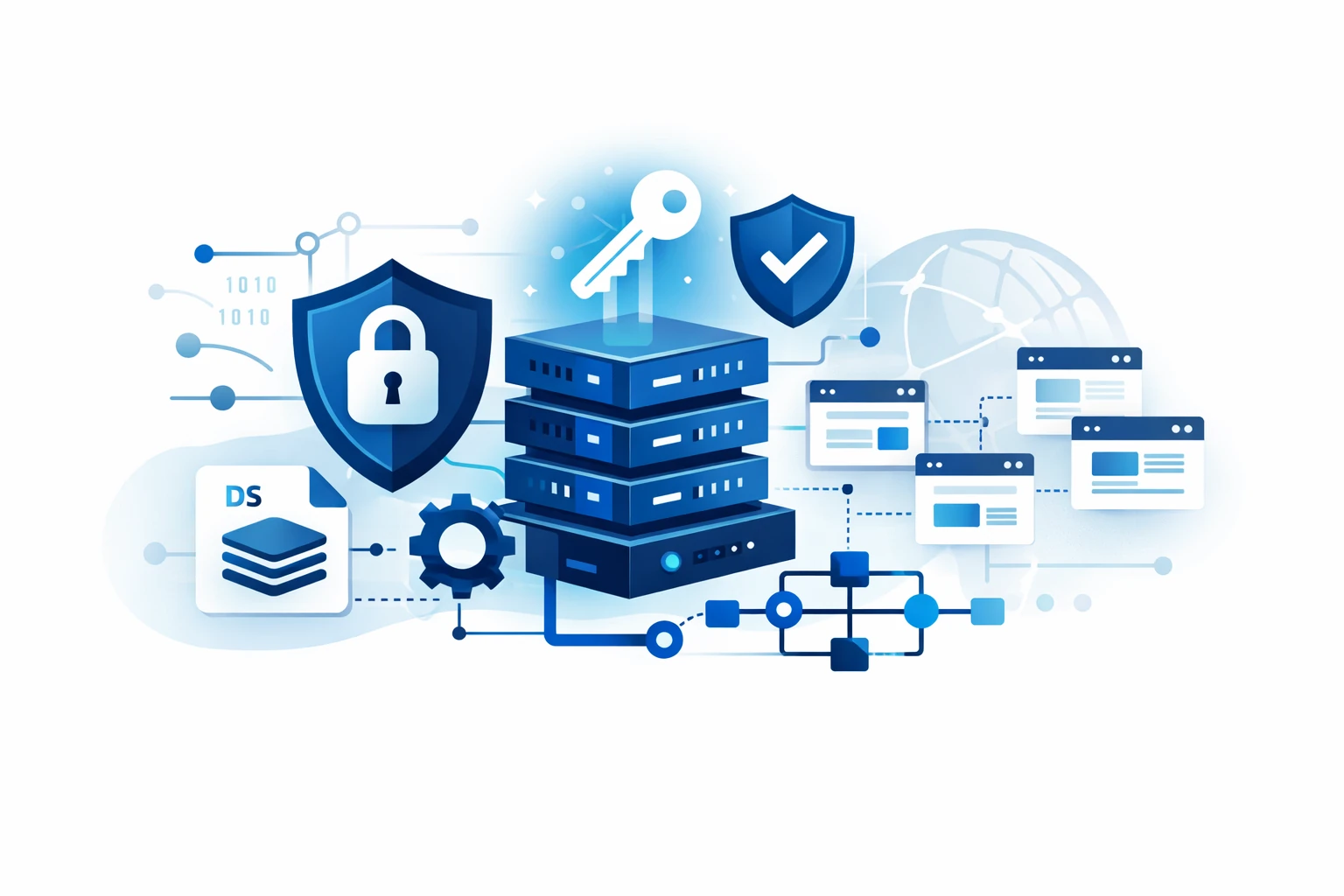
At the heart of DNSSEC is a chain of trust built from the zone’s signing keys through a Delegation Signer (DS) record in the parent zone. The child zone publishes DNSKEY records containing public keys, signs its data with a Zone Signing Key (ZSK), and then a Key Signing Key (KSK) signs the DNSKEY set itself. The parent zone stores DS records that reference the child’s DNSKEY via a digest; validators at recursive resolvers follow this chain from root down to each zone. This architecture enables verification of responses and helps prevent forged answers, which is especially critical for organizations with diversified domain portfolios. The process is defined in RFC standards and summarized in deployment guides, including an explicit explanation of how DS links a parent to a child DNSKEY. In practice, setting up DNSSEC is as much about process and governance as it is about cryptography. (icann.org)
Key concepts in the DNSSEC chain
- DNSKEY — the public signing key (or keys) for a zone. The private key signs the zone data. The public part is published in the zone for resolvers to verify signatures.
- RRSIG — the digital signatures attached to signed RRsets (e.g., A, AAAA, MX records).
- DS — the Delegation Signer record published in the parent zone; it contains a digest of the child zone’s DNSKEY, enabling the parent-to-child trust linkage.
- KSK vs ZSK — a two-key model where the ZSK signs data in the zone and the KSK signs the DNSKEY RRset itself. This separation reduces the exposure risk of frequent key material changes.
- Trust chain — from the root, through TLDs, to the individual zone, validated by DS and DNSKEY signatures with corresponding RRSIGs.
For a concise, practitioner-friendly explanation of how these pieces fit together, Cloudflare’s overview of DNSSEC basics lays out the RRsets, the delegation process, and the chain of trust in approachable terms. It also highlights the role of DS, DNSKEY, and RRSIG in enabling validation across the hierarchy. Understanding the basic data flows helps you design a governance model that scales across many domains. (cloudflare.com)
A Step-by-Step Playbook for a Multi-Domain DNSSEC Program
Below is a practical, six-step framework designed for domain portfolios. Each step emphasizes governance, repeatability, and measurable outcomes, with concrete actions you can assign to teams, registrars, and hosting providers. The steps borrow from established deployment guidance while tailoring them to portfolio-level needs.
Step 1 — Domain inventory and governance
The first step is to create, own, and maintain a single source of truth about all domains you oversee. This inventory should document:
- Current signing status per zone (signed, unsigned, or in transition).
- Authoritative name servers and zone- or DNS provider details.
- Registrant- and admin-level contacts for coordination with registrars and signature rollovers.
- DS publication status in the parent zone and which parent zone controls the DS entry (e.g., the registry or the registrar).
Governance should formalize who owns the DNSSEC program (role and accountability), the signing cadence, and the change-control process for keys and DS updates. Documentation is a prerequisite for reliable multi-domain DNSSEC operations; ICANN’s deployment guidance emphasizes keeping governance and technical documentation up to date to support continuity and coordination across multiple actors and zones. Governance is a prerequisite for scale. (icann.org)
Step 2 — Signing strategy and key management
Decide which zones you will sign now and which to stage for later, based on risk, traffic, and operational capacity. Your signing strategy should define:
- Which zones get DNSSEC-enabled first (baseline) and which follow in a staged rollout.
- The Zone Signing Key (ZSK) rotation cadence and the minimum cryptographic strength you require (algorithms and key lengths).
- The Key Signing Key (KSK) rollover policy, including the pre-publish and rollover windows to avoid validation gaps.
- Algorithm choices (e.g., RSA, ECDSA) and digest types, with a preference for modern, widely supported configurations.
ICANN’s deployment guidebook discusses practical considerations around ZSK and KSK rollovers, including recommended rollover patterns and the importance of accounting for zone propagation and resolver caches. It also highlights the need to publish DS records when keys change, which is a critical step to preserve the chain of trust. Plan rollovers with pre-publish and cross-checks to minimize negative impact on resolvers. (icann.org)
Step 3 — Establish the chain of trust: publish DS records
Once a zone is signed, you must publish a DS record for that zone in its parent zone. The DS record encodes a digest of the child zone’s DNSKEY and serves as the anchor that lets validating resolvers link the child to the parent’s trust. The process is inherently hierarchical: the parent zone’s DS must reflect the child’s DNSKEY; if the DS is absent or out of date, validation fails and responses may be rejected. As ICANN notes, the root zone’s signing ceremony and subsequent DS updates are central to enabling validation globally. In practice, this means coordinating with registrars and, when necessary, registries to publish or rotate DS records in the parent zone. Automatic DS updates (where supported) can reduce human error, but manual verification remains essential. (cloudflare.com)
The DS concept is formalized in RFC 4034, which defines how a DS RR points to a DNSKEY RR and how the digest-based linkage is used by validators. The DS RR’s fields—digest type, key tag, algorithm, and digest value—enable resolvers to authenticate the child DNSKEY without exposing it in the parent zone. This is a foundational piece of the chain of trust. (ietf.org)
Step 4 — Deployment and validation: test before going live
Before enabling DNSSEC in production, validate the chain of trust and ensure all signatures and DS records are correctly configured. Useful validation checks include:
- Verifying that DNSKEY RRsets exist and are signed (and that RRSIGs accompany them).
- Confirming that DS records exist in the parent zone and point to the correct DNSKEY(s).
- Running validation tests against signed zones using dedicated tools (e.g., DNSSEC validators and checkers mentioned in deployment guides and labs).
DNSSEC validation occurs on resolvers that perform this check, which is why enabling validation on your network (or trusting validators in the path) is a key step in the rollout. The DNSSEC ecosystem includes validator implementations, and some environments enable validation for internal testing before broad public use. Cloudflare’s overview shows the end-to-end validation steps—requesting the RRset, fetching DNSKEYs, and verifying signatures with the chain of trust. This practical walkthrough helps operators think about the data flow and caching implications during rollout. (cloudflare.com)
Step 5 — Operational monitoring and maintenance
DNSSEC introduces a new operational dimension: you must monitor key lifetimes, DS expiry, and zone signing consistency across zones. A robust monitoring program should include:
- Alerts for upcoming key rollovers, DS expiration, and RRSIG validity periods.
- Regular checks that each signed zone continues to publish a valid DS in its parent zone.
- Periodic validation testing with trusted resolvers to detect subtle misconfigurations that can cause validation failures under real user conditions.
ICANN emphasizes documenting the deployment strategy and maintaining ongoing governance to ensure continuity, especially as teams and systems evolve. The deployment guidebook also highlights the importance of using validation tools (like DNSSEC health checks) and monitoring the status of chains-of-trust across zones. Operational discipline and automation reduce the risk of drift in a multi-domain program. (icann.org)
Step 6 — Rollover planning and incident readiness
Key rollover is the trickiest part of DNSSEC operations. When a rollover occurs, you must manage the transition so no resolver loses the chain of trust. ICANN’s deployment guidebook describes double-sign, double-RRSIG, and other techniques to ensure a smooth transition while caches refresh. Anticipate potential issues by documenting a rollback plan and keeping offline backups of KSK/ZSK material in a secure, offline location. The guidance also stresses that a well-prepared plan for KSK and ZSK rollover reduces the risk of validation outages or misconfigurations in a live environment. Preparation and careful timing are the keys to successful rollovers. (icann.org)
Expert Insight and Practical Limitations
Expert opinion in the DNSSEC community emphasizes a governance-first stance. A policy and practice framework helps translate cryptographic tasks into auditable, repeatable steps, which is essential when managing dozens or hundreds of domains. ICANN’s guidance explicitly links DNSSEC deployment to documented policies and procedures (DNSSEC Policy and DPS), underscoring that successful implementation is not just about signing zones, but also about documented controls and responsibilities. This perspective mirrors best practices observed in large-scale deployments and ccTLDs. The most valuable insight is to treat DNSSEC as an ongoing governance program, not a one-off configuration. (icann.org)
At the same time, there are real limitations to DNSSEC adoption. For example, while DNSSEC protects integrity and authenticity, it does not provide confidentiality for DNS data. This distinction matters for portfolio owners who must balance security with privacy/regulatory considerations. This limitation is explicitly noted in deployment guides and standards discussions. Plan accordingly by combining DNSSEC with other security controls and data handling policies. DNSSEC is a valuable layer, but not a replacement for a broader security program. (icann.org)
Common Mistakes and How to Avoid Them
- Forgetting to publish DS records in the parent zone after signing a zone. Without the DS entry, the chain of trust cannot be validated beyond the parent zone, which will cause validation to fail downstream. ICANN’s deployment guidebook explicitly describes this coordination step and the timeline for DS publication. (icann.org)
- Misaligning the DS digest with the child DNSKEY (e.g., wrong key tag or digest type). RFC 4034 details the DS RR fields and how the digest ties to the child DNSKEY. Small mistakes in DS formatting or digest calculation can break validation entirely. (ietf.org)
- Underestimating the complexity of key rollovers and the need for a carefully planned rollover window. ZSK and KSK rollovers have to be synchronized with parent zones and resolver caches; failing to pre-publish or mis-timing can produce validation gaps. The deployment guidebook provides explicit rollover strategies and timing guidance. (icann.org)
- Signing some, but not all, zones in a portfolio without a phased plan. DNSSEC scales best when a defined deployment plan, roll-out milestones, and ongoing validation are in place across the portfolio. ICANN and other deployment guides emphasize governance and phased deployment as keys to success. (icann.org)
Practical Tools and a Portfolio-Ready Framework
Several practical tools and resources support DNSSEC deployment, testing, and validation. For example, DNSSEC validation tools and lab environments help teams verify chain-of-trust status before going live. The ICANN deployment guidebook also highlights testing aids such as DNSViz for visualizing DNSSEC status and validating the chain of trust across the zone. These tools are especially useful in portfolio contexts where you must validate multiple zones with consistent results. Having a standardized toolkit reduces the risk of mismatches across zones. (icann.org)
Beyond signing and DS publication, automation can help you scale: automating DS updates where supported by the registrar/registry, and automating ZSK/KSK rollovers through a controlled workflow. The DNSSEC glossary and DDS/CDNSKEY discussions show techniques for automation, including CDS and CDNSKEY records that help streamline DS updates in the parent zone where registrars support such flows. In practice, automation reduces human error and accelerates the response to key-management events. (support.dnsimple.com)
Putting WebAtla in Context: Domain Inventory and Monitoring Support
Managing a DNSSEC program at scale benefits from robust domain data and monitoring capabilities. For teams building inventory, registrar coordination, and DS management, tools that provide clear visibility into domain lists and DNS status are essential. WebAtla offers a suite of domain-data resources that can support DNSSEC rollout and ongoing governance, including:
- List of domains by TLDs to understand domain distribution across zones and registrars.
- List of domains by Countries to identify geographic deployment patterns and regulatory considerations.
- RDAP & WHOIS Database for ownership and contact details, useful during DS-change coordination and registrar communications.
In practice, inventory accuracy and change-control discipline are as important as cryptographic strength when you’re managing a large portfolio. If you’re cataloging domains and seeking reliable, refreshed data to guide DNSSEC decisions, a consolidated view like a portfolio inventory is invaluable for governance and operational planning. For teams that want deeper domain data at scale, WebAtla’s RDAP/WHOIS database and related lists can be a practical source of truth to coordinate DS publication, contact changes, and registrar interactions.
Conclusion: A Scalable, Governance-Driven DNSSEC Path
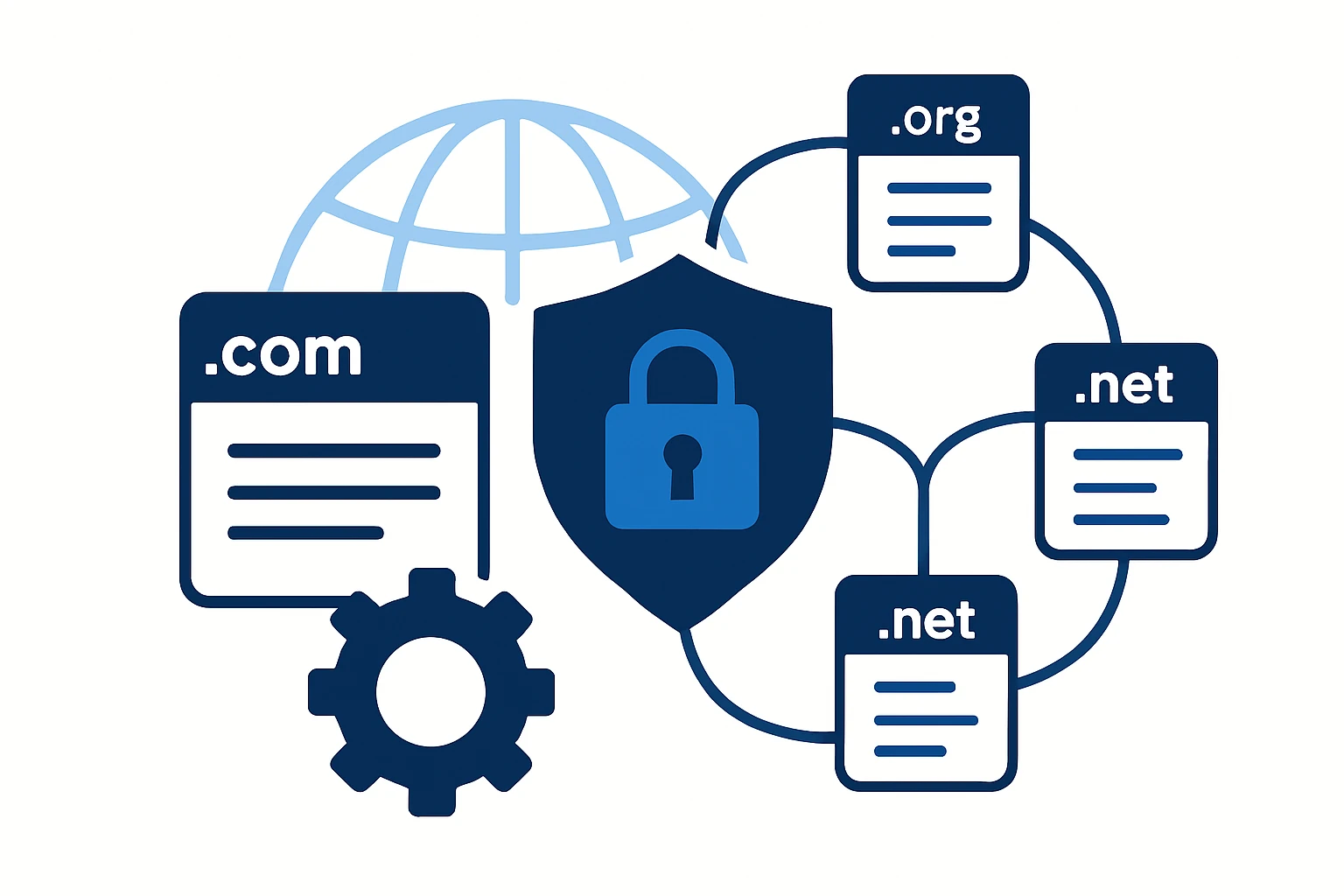
Enabling DNSSEC across a multi-domain portfolio is more than turning on a switch; it requires a governance framework, a signing and key-management plan, and an operational rhythm that can scale with your domain estate. The six-step playbook outlined here emphasizes inventory, staged deployment, DS publication, validation testing, ongoing monitoring, and rollovers—each with concrete actions and governance considerations. While DNSSEC provides robust protection against certain DNS threats, it is not a substitute for a broader security program, and it does not encrypt DNS data. Organizations that treat DNSSEC as a living governance program — with documented policies, auditable procedures, and a scalable automation strategy — are best positioned to realize its benefits across a growing portfolio.
For teams seeking practical data to accompany DNSSEC workflows, integrating portfolio-domain data and ownership details from trusted sources (such as a centralized RDAP/WHOIS database and domain inventories) helps ensure DS updates are coordinated smoothly across registrars and zones. Look to credible deployment guides, such as ICANN’s DNSSEC Deployment Guidebook, for extensible, field-tested guidance on signing practices, DS publication timelines, and rollover strategies. And remember: the chain of trust is only as strong as its weakest link. Maintain discipline across people, process, and technology to keep your DNSSEC program resilient as your domain portfolio grows.